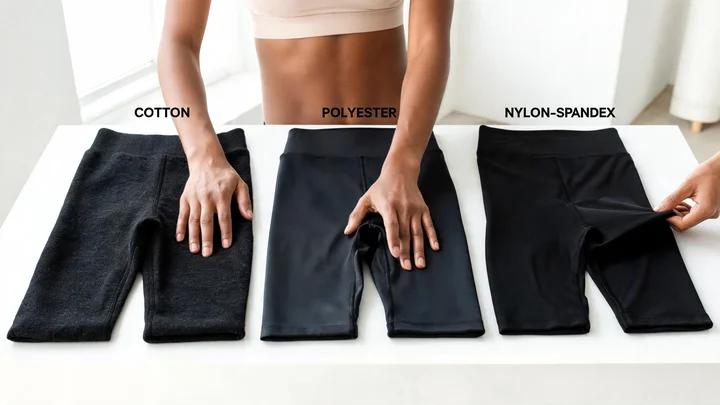
Comparing cotton vs nylon vs polyester leggings is one of the most critical decisions for activewear brands, gym owners, and wholesale apparel buyers. Each textile provides distinct advantages in elasticity, moisture wicking, tensile strength, and skin feel. Choosing the right fabric ensures squats-proof opacity, premium customer satisfaction, and optimal manufacturing costs for your brand.
1. Cotton vs Nylon vs Polyester Leggings: Full Fabric Breakdown
Understanding how cotton vs nylon vs polyester leggings perform under athletic stress determines the success of an activewear line. Cotton delivers superior organic comfort for everyday athleisure, but its hydrophilic fibers retain perspiration, making it unsuitable for intense fitness workouts. Polyester offers exceptional color retention, chemical sublimation readiness, and affordable mass-market viability. Nylon represents the gold standard for high-performance athletic leggings, combining incredible tensile durability, silk-like skin touch, and unmatched elasticity recovery.
2. Cotton vs Nylon Leggings
Cotton and nylon serve very different purposes in the leggings market. Cotton feels soft and breathable for casual everyday wear, but it absorbs moisture and becomes heavy during workouts. Nylon repels moisture and dries quickly, making it the preferred option for serious athletic performance and gym-focused activewear. Pairing high-grade nylon with spandex creates garments that resist abrasion and retain structural compression.
3. Polyester Leggings Strengths
Polyester leggings balance affordability with strong moisture management performance. Polyester is widely used for gym leggings because it holds vibrant sublimation prints extremely well, performs effectively during exercise, and supports competitive pricing for large-scale wholesale production. While slightly firmer than nylon, high-grade micro-polyester blends engineered with four-way stretch deliver reliable athletic performance. Discover more in our comprehensive moisture wicking fabric breakdown.
4. Why Nylon-Spandex Dominates Premium Activewear
Premium leggings overwhelmingly use nylon-spandex blends because they combine softness, opacity, stretch recovery, and durability. Nylon provides the smooth hand feel and squat-proof performance customers expect, while spandex delivers flexibility and compression support during movement. The standard 80% nylon and 20% spandex ratio prevents bagging at the knees and holds up across countless gym sessions.
5. Choosing Fabric for Your Target Market
Fabric selection should match your customer and retail positioning. Value-focused brands often choose polyester-spandex for affordability, while premium activewear brands usually prefer nylon-spandex for higher quality perception. Casual lifestyle leggings may still benefit from cotton blends for softness and comfort. For complementary fitness lines, explore our comparison on gym shorts lengths.
6. Gym Leggings Fabric by Activity
Different workouts require different fabric priorities. Yoga leggings benefit from buttery-soft stretch fabrics, while running leggings require lightweight moisture management. Strength training leggings demand higher opacity and compression to remain squat-proof under intense gym conditions. For full team kits and athletic teamwear, see our manufacturing guide to custom soccer kits.
7. Technical Specs, Sizing, Pricing & International Delivery
When manufacturing custom leggings with an OEM factory like About Benjima Clothing, brand owners must evaluate technical production parameters:
- Fabric Weight & GSM: We recommend 220–250 GSM for lightweight summer leggings, and 260–300 GSM for completely squat-proof, high-compression gym leggings. Interlock knit construction ensures dual-sided smoothness without see-through sheer.
- Comprehensive Sizing Runs: Standard size grading spans XS through 3XL, incorporating tailored high-waisted bands, gusseted crotch panels, and ergonomic flatlock seam placement to prevent chafing.
- Manufacturing Process: Garments are knitted from high-filament yarns, precision laser cut to avoid raw fraying, stitched using 4-needle 6-thread flatlock machines, and finished with heat-sealed brand labels.
- Wholesale Pricing: Bulk unit costs range between $6.50 and $13.50 FOB, depending on order quantities, fabric choice (polyester vs. recycled nylon), and custom detailing such as bonded pockets or silicone grips.
- Worldwide Delivery (USA, UK, Europe): We provide reliable international shipping. Express air freight (DHL/FedEx DDP) takes 5 to 8 business days for time-sensitive launches, while ocean cargo freight delivers in 22 to 32 days for large-volume container replenishment.
8. Frequently Asked Questions (FAQs)
Is nylon a good fabric?
Yes, nylon is an exceptionally good fabric for activewear and leggings. It features high tensile strength, outstanding abrasion resistance, lightweight moisture management, and a soft, supple hand feel that outperforms polyester in durability and skin comfort.
Is nylon or polyester better for leggings?
Nylon is generally better for premium workout and gym leggings because of its buttery-soft feel, superior elasticity, and squat-proof opacity. Polyester is better for sublimated prints, budget-friendly collections, and fast-drying outdoor activewear.
What is the best fabric for gym leggings?
Nylon-spandex blends (especially 80/20 or 75/25) are considered the best option for premium gym leggings due to softness, stretch, and moisture management.
Are polyester leggings good for workouts?
Yes, polyester leggings provide strong moisture wicking, durability, and fast drying for intense training sessions.
Are cotton leggings suitable for exercise?
Cotton leggings are comfortable for casual wear and light stretching, but they absorb sweat and dry slowly, making them unsuitable for heavy gym workouts.
For bulk orders, custom manufacturing, or wholesale inquiries, contact us at
business@benjima.com.
{
“@context”: “https://schema.org”,
“@type”: “FAQPage”,
“mainEntity”: [
{
“@type”: “Question”,
“name”: “Is nylon a good fabric?”,
“acceptedAnswer”: {
“@type”: “Answer”,
“text”: “Yes, nylon is an exceptionally good fabric for activewear and leggings. It features high tensile strength, outstanding abrasion resistance, lightweight moisture management, and a soft, supple hand feel that outperforms polyester in durability and skin comfort.”
}
},
{
“@type”: “Question”,
“name”: “Is nylon or polyester better for leggings?”,
“acceptedAnswer”: {
“@type”: “Answer”,
“text”: “Nylon is generally better for premium workout and gym leggings because of its buttery-soft feel, superior elasticity, and squat-proof opacity. Polyester is better for sublimated prints, budget-friendly collections, and fast-drying outdoor activewear.”
}
},
{
“@type”: “Question”,
“name”: “What is the best fabric for gym leggings?”,
“acceptedAnswer”: {
“@type”: “Answer”,
“text”: “Nylon-spandex blends (especially 80/20 or 75/25) are considered the best option for premium gym leggings due to softness, stretch, and moisture management.”
}
},
{
“@type”: “Question”,
“name”: “Are polyester leggings good for workouts?”,
“acceptedAnswer”: {
“@type”: “Answer”,
“text”: “Yes, polyester leggings provide strong moisture wicking, durability, and fast drying for intense training sessions.”
}
},
{
“@type”: “Question”,
“name”: “Are cotton leggings suitable for exercise?”,
“acceptedAnswer”: {
“@type”: “Answer”,
“text”: “Cotton leggings are comfortable for casual wear and light stretching, but they absorb sweat and dry slowly, making them unsuitable for heavy gym workouts.”
}
}
]
}