Double breasted chef jackets
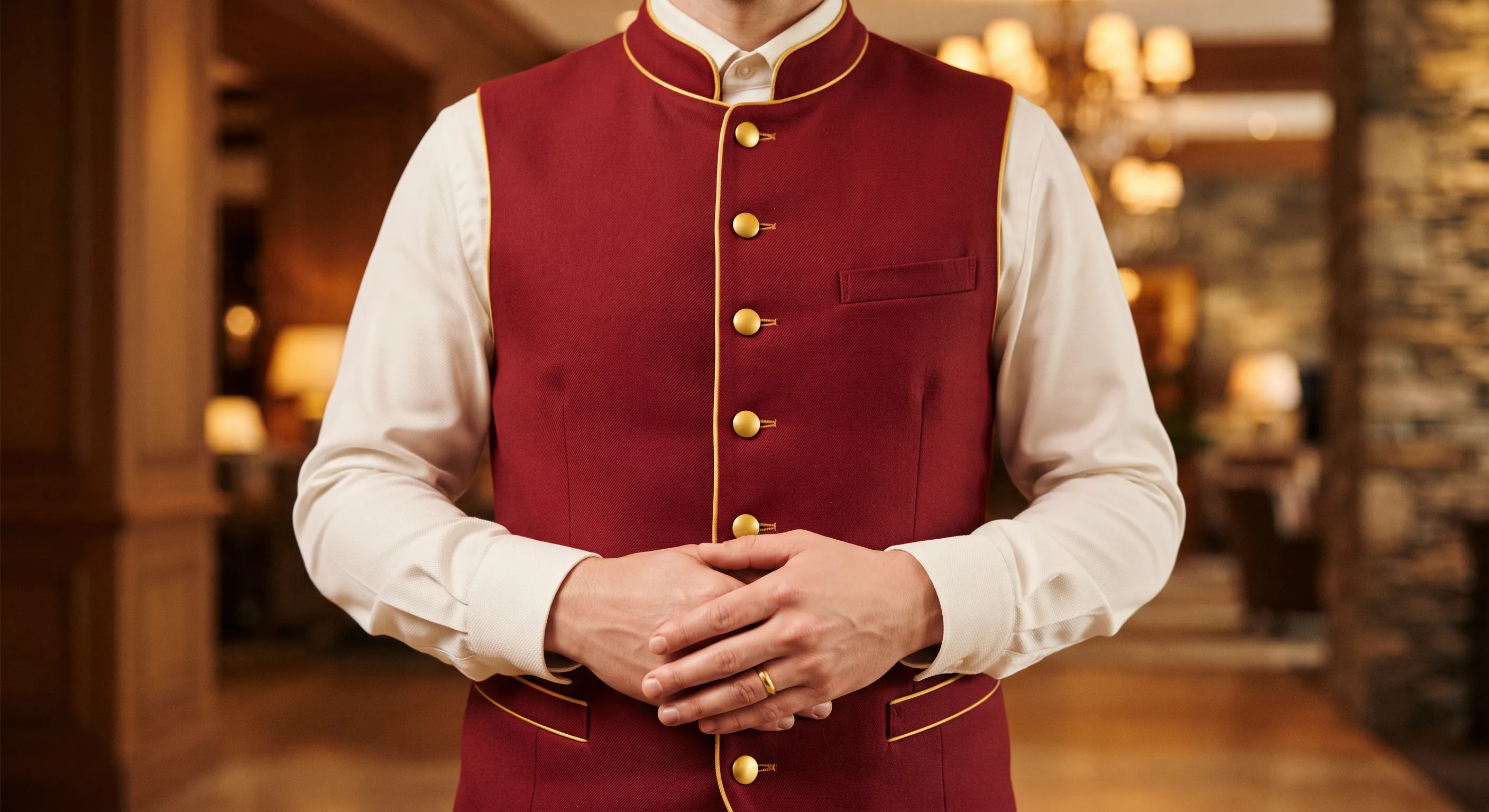
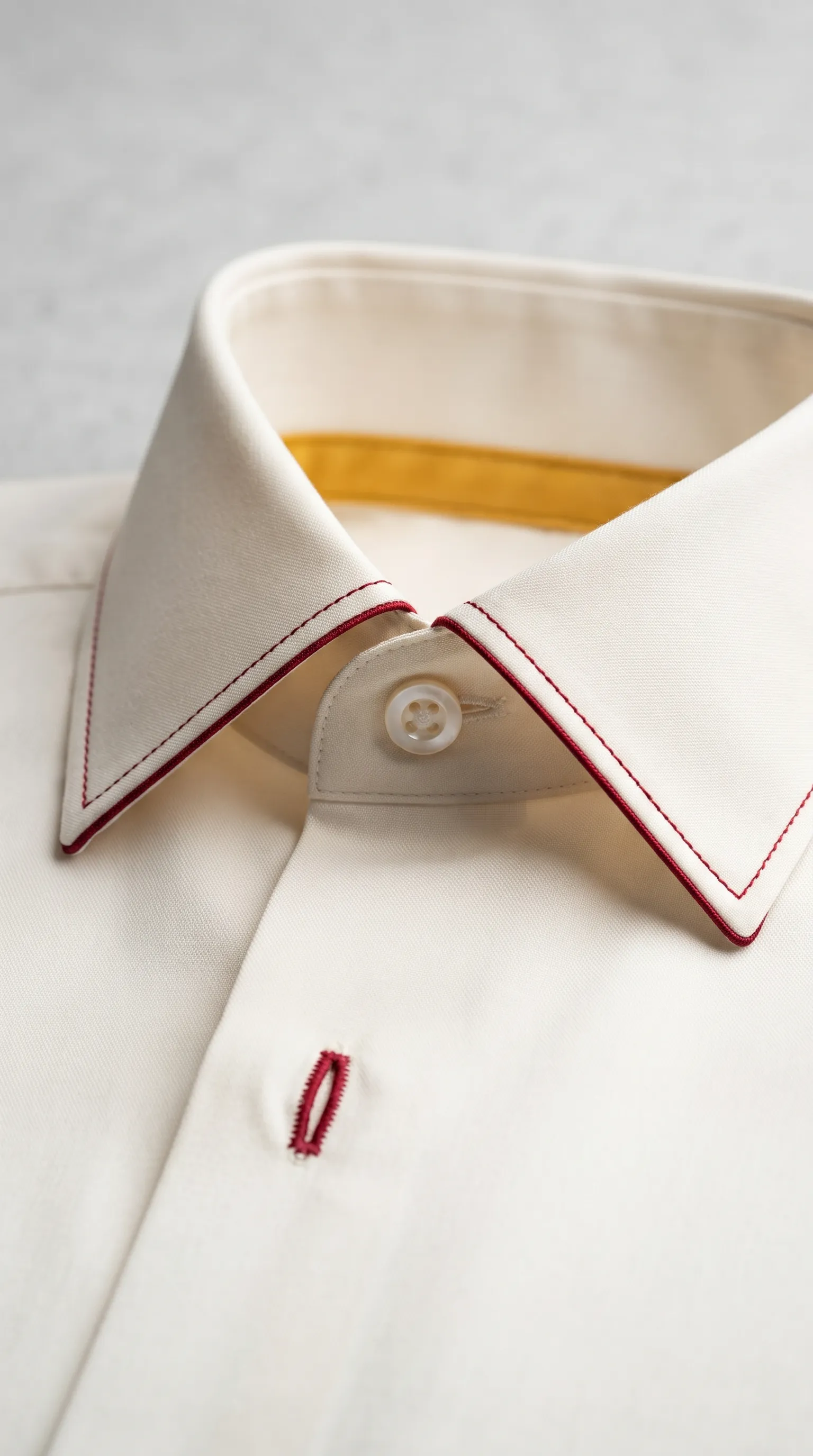
The classic brigade jacket in stain release chef twill, with a reversible front so a stained panel can be turned during service, and a collar built to sit flat rather than roll.
Get in touch
Sales line+92 329 6140058 Emailbusiness@benjima.com Factory and officeRungpura, Sialkot, Punjab, Pakistan Working hoursMonday to Saturday, 9:00 to 18:00 PKTFollow
Double breasted jackets, stain release twill, mesh ventilated backs and aprons built for a hot line. Specified around the temperature your kitchen actually runs at rather than around a photograph of a kitchen.
Kitchen programme / hot line rated
Kitchen uniforms get bought on appearance and judged on temperature. A heavy cotton twill photographs beautifully and becomes unbearable next to a salamander at eight in the evening. A light poly blend feels cool for a week and then holds every oil splash it has ever met. The right answer is usually a mid weight twill with a stain release finish and ventilation placed where the heat actually sits.
That is why the back panel matters more than the buttons. A mesh or perforated back panel, a vented underarm gusset and a shorter sleeve option change the working temperature of the garment far more than switching the cloth by twenty grams. The rest is construction: a double breasted front that still closes cleanly after a hundred washes, a collar that does not roll, and a placket that does not gape when someone reaches across a pass.
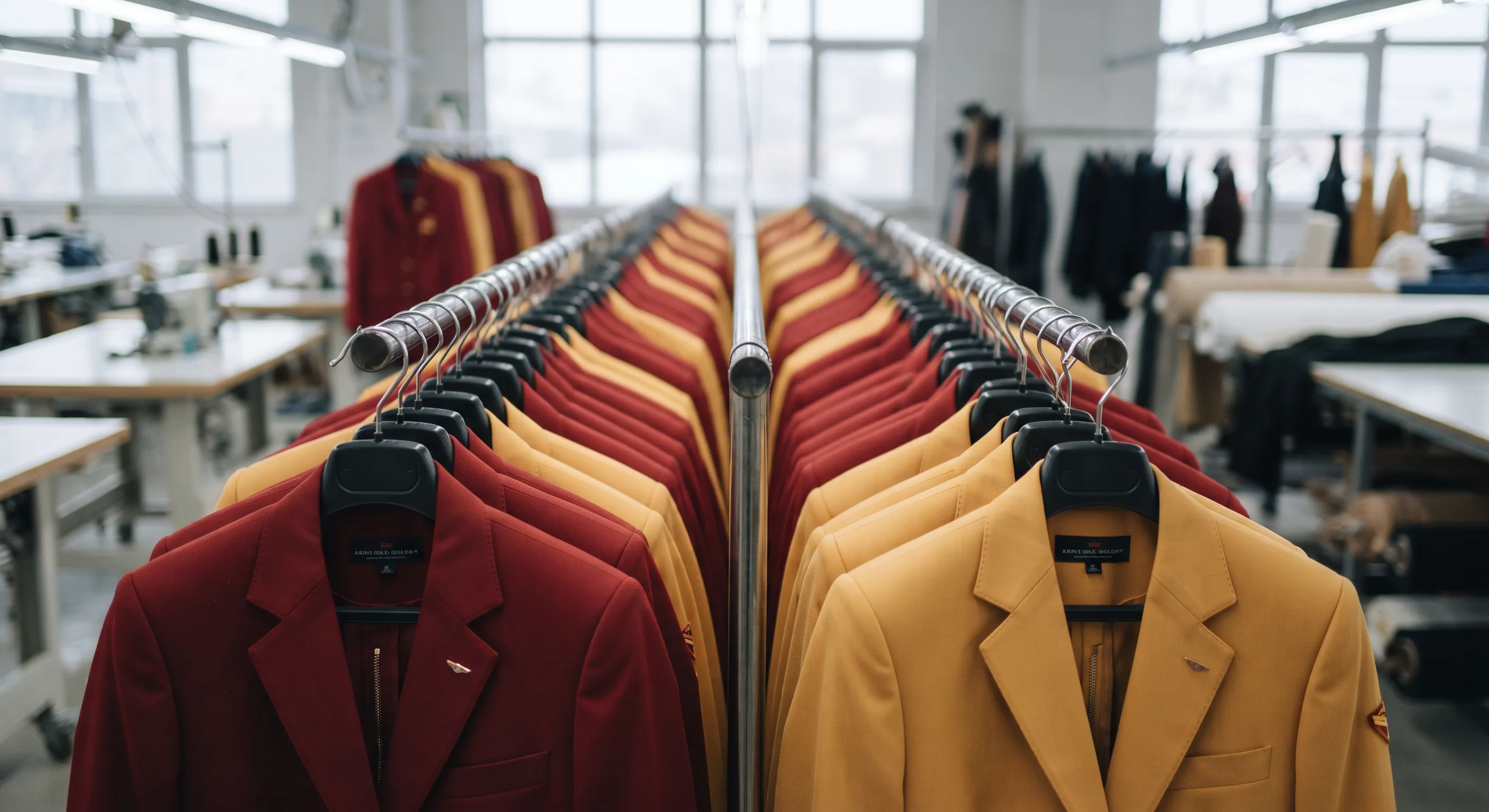
Front of house and back of house also need to read differently. Head chef, sous, line, pastry and kitchen porter are often distinguished by jacket colour, piping, button style or an embroidered role title, and that system has to survive top up orders. Your colours and trims are held as a standard so the second order does not quietly introduce a different black.
Most kitchens buy jackets from one place and aprons from another, then discover the blacks do not match on service photographs. Running the whole brigade through one programme fixes that on the first order.
The classic brigade jacket in stain release chef twill, with a reversible front so a stained panel can be turned during service, and a collar built to sit flat rather than roll.
A cleaner contemporary block for open kitchens and chef counters, with a concealed press stud placket, contrast piping and a slimmer sleeve that stays out of the plate.
Mesh back panel and underarm gusset for grill, wok and pass positions. Same outer appearance as the standard jacket, several degrees cooler to work in.
Drawcord and elasticated waists in check, pinstripe or plain, with a wider leg for airflow and a reinforced seat that survives squatting at a low oven twenty times a shift.
Bib, waist, cross back and short waiter aprons. Strap joins bar tacked, D ring and buckle hardware, and a pocket layout set for the role rather than the catalogue.
Hard wearing tunics, coats and wipe clean aprons for prep, wash up and receiving. Built cheaper on purpose, because these garments take the heaviest cycle count.
Skull caps, beanies, bandanas and traditional toques. Small pieces, but the ones that finish a service photograph and the ones most often bought from a third supplier.
Embroidered restaurant marks, chef names, role titles, contrast buttons and piping colour sets so the brigade hierarchy is readable from the pass.
Sub pages carry the cloth options, ventilation choices, closure types and price bands for each piece, which is what a group executive chef normally needs before signing off a brigade wide change.
Double breasted, single breasted and ventilated blocks in stain release twill.
Bib, waist and cross back aprons with bar tacked straps and role specific pockets.
Check, pinstripe and plain, with drawcord waists and reinforced seats.
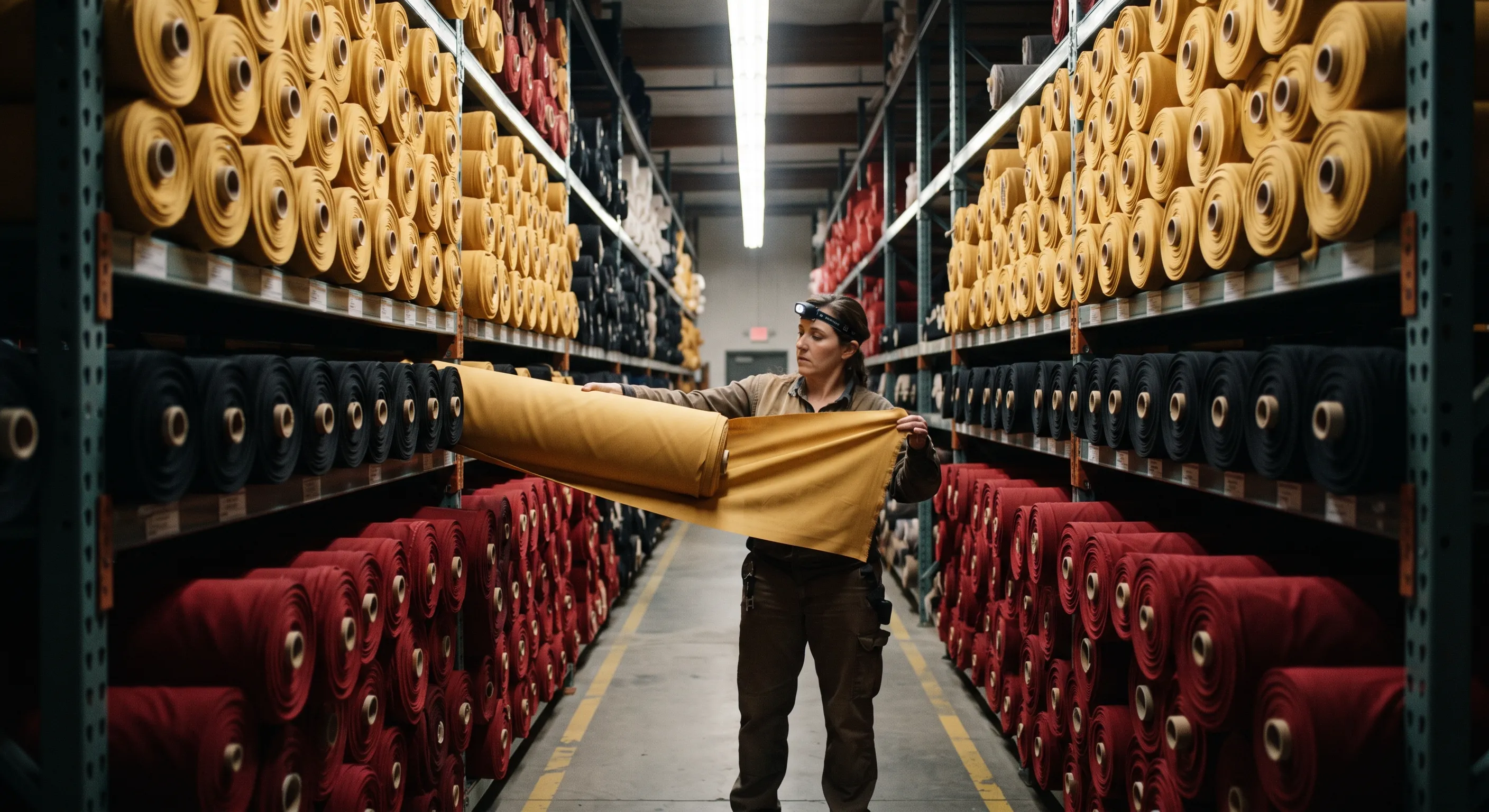
Kitchen cloth has three jobs: release a stain, survive a hot wash and stay bearable at the stove. These are the base cloths that manage all three.
| Cloth | Weight | Construction | Where it is used |
|---|---|---|---|
| Chef twill | 220 GSM | 2/1 twill, stain release | Jackets and trousers |
| Lightweight chef twill | 190 GSM | 2/1 twill, stain release | Hot climate jackets |
| Poly cotton poplin | 180 GSM | Plain weave | Prep coats and porter wear |
| Cotton drill | 260 GSM | 3/1 twill | Bib aprons and heavy use |
| Polyester mesh | 140 GSM | Open knit | Back panels and gussets |
| Waxed or coated cotton | 280 GSM | Coated face | Wipe clean wash up aprons |
| Denim | 300 GSM | 3/1 twill | Front of house and counter aprons |
Whites are specified with an optical brightener that holds through high temperature laundry, because a chef jacket that greys after two months is the fastest way to make a good kitchen look tired on a review photograph.
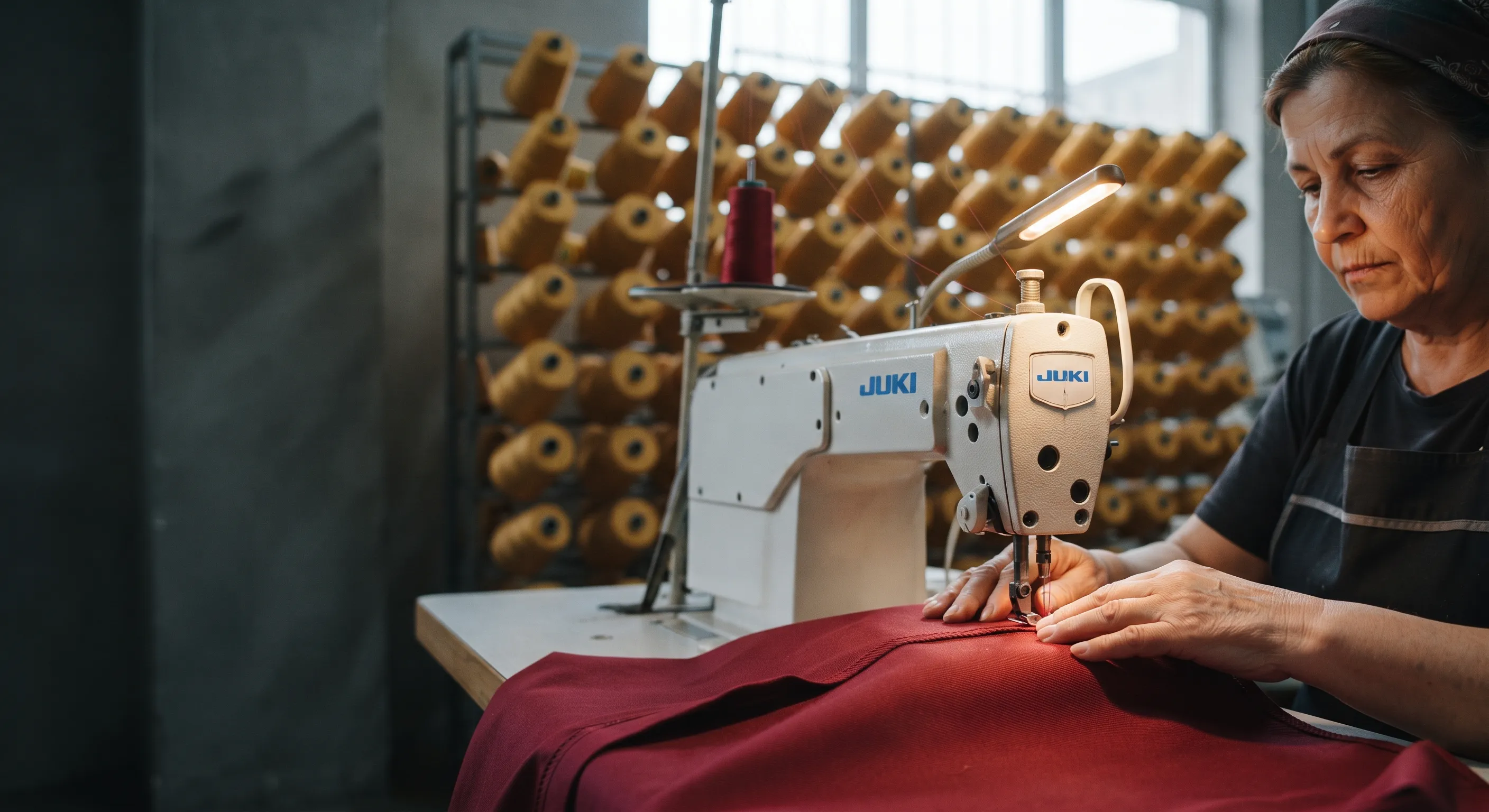
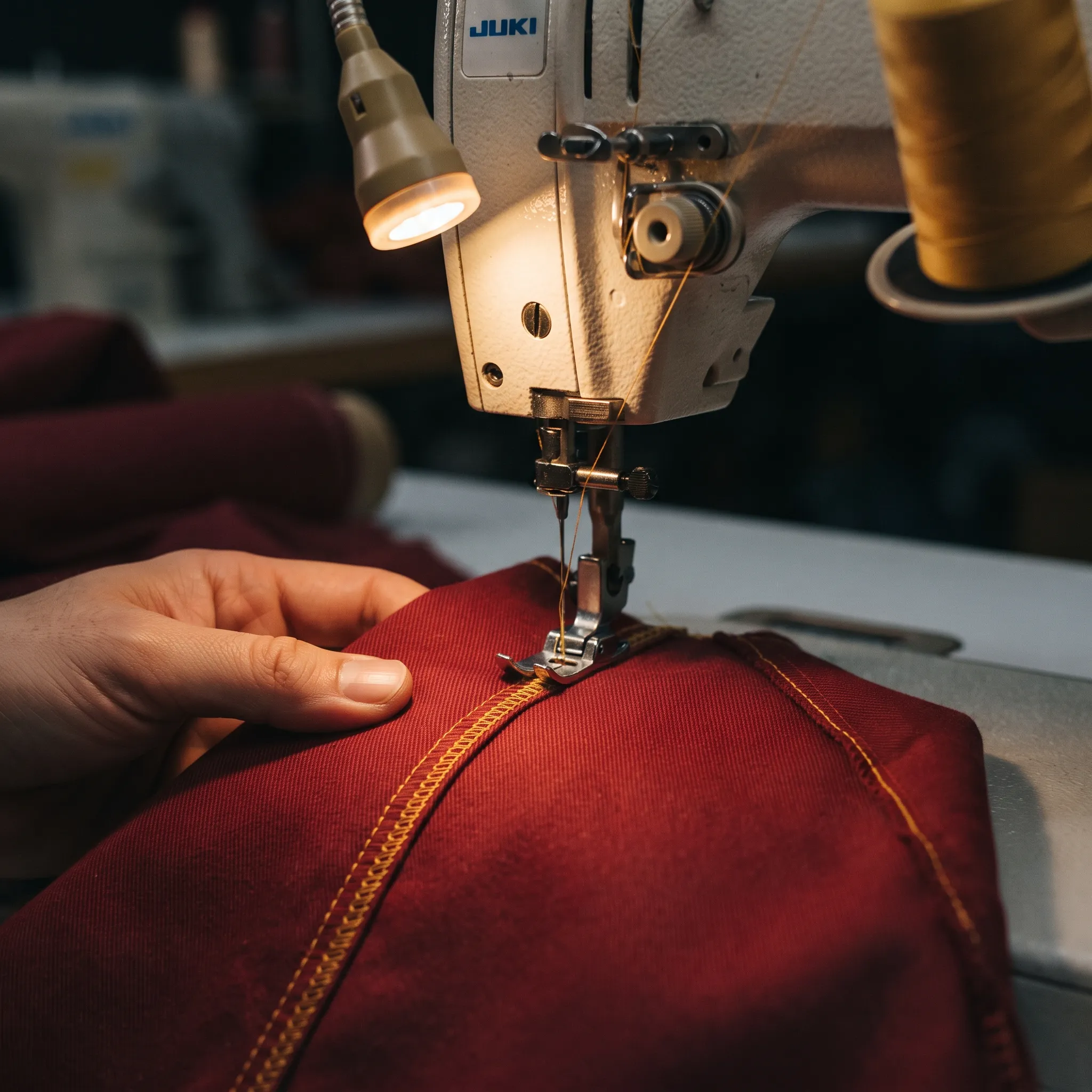
Cutting, panel assembly, back panel ventilation and finishing on a live kitchen run. Worth watching the placket and collar stages, since those are the two details that separate a jacket that holds its shape from one that does not.
A chef uniform brief that begins with a colour reference produces an average jacket. One that begins with the kitchen layout and the service style produces a jacket the brigade will actually keep wearing.
Service style, open or closed kitchen, station heat, brigade structure and how the garments are laundered. This decides cloth weight, ventilation and closure before anything is drawn.
Head chef, sous, line, pastry and porter separated by colour, piping, button or embroidered title. The system is recorded so it survives top up orders.
Blocks drafted to your size chart with ladies fit graded separately, plus sleeve length options for a brigade that runs both long and short.
Stain release twill weight matched to station heat, optical brightener for whites, mesh panel placement set from the audit rather than from a template.
A real jacket in the approved cloth with your mark applied, in seven to ten days. Most kitchens put it on a line chef for a service before signing off, which we recommend.
Assembled by operation with bar tacks at pocket corners, strap joins and vent heads, then pressed so the collar and placket set correctly.
AQL 2.5 with measurement checks against the signed spec, plus a wash test on a sample pull to confirm the whites hold and the stain release performs.
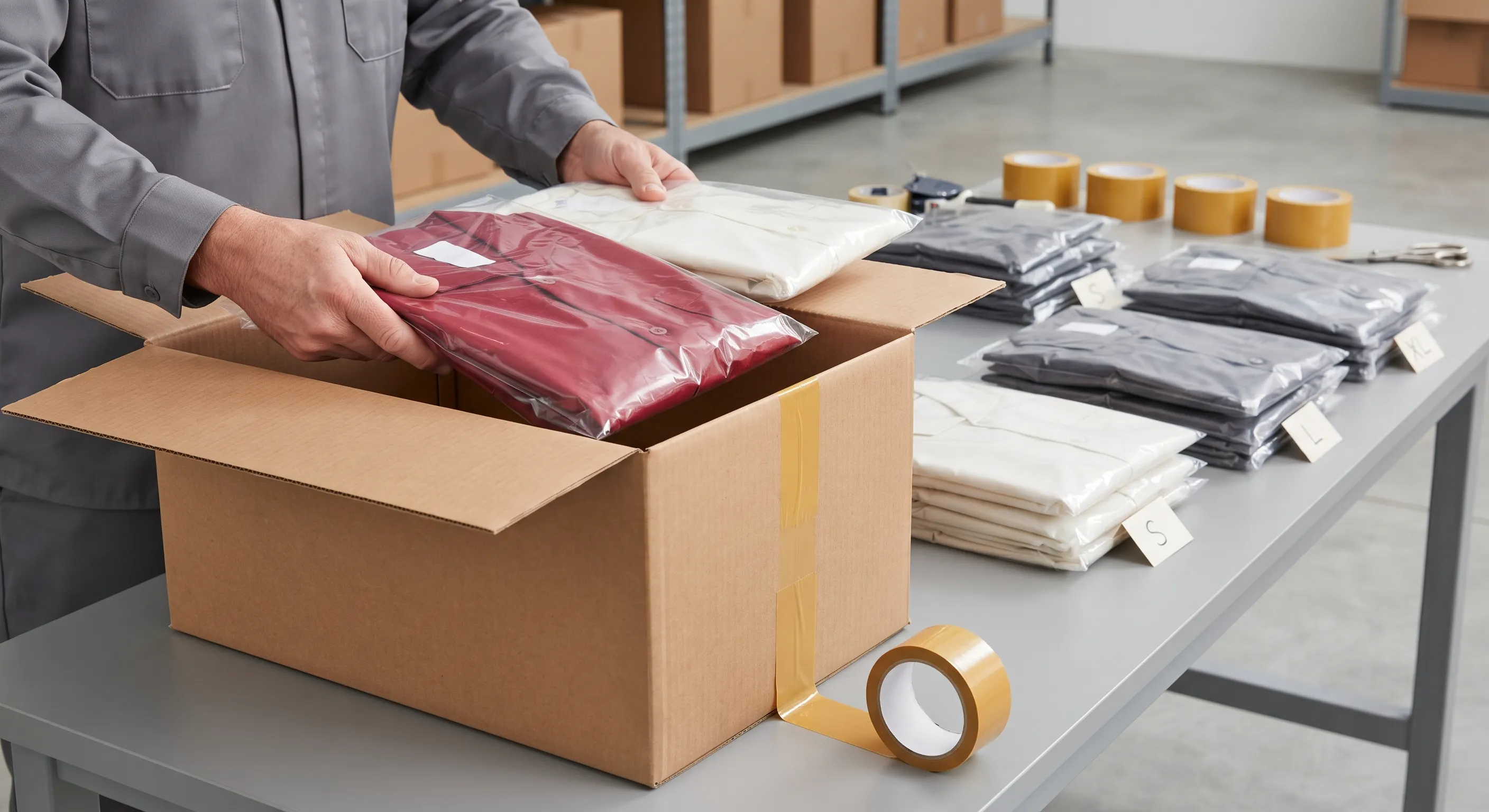
Poly bagged, sorted by size and site, carton marked per restaurant, with export documents handled here for multi country groups.
Kitchen uniform spend is rarely about the first order. It is about how many jackets are still in rotation after a year.
Optical brightener specified for high temperature laundry, and a stain release finish applied at the mill rather than sprayed on, so oil lifts in the wash instead of setting into the weave.
Mesh back panels and underarm gussets placed from your station layout. A grill chef and a pastry chef do not need the same jacket, and pretending they do costs you jackets.
Double breasted fronts built with the correct interlining and bar tacked at the closure points, so the front does not gape when someone reaches across a pass.
The strap join is where aprons fail. Ours are bar tacked and reinforced with a backing patch, which is unglamorous and the reason they last a year rather than a season.
Your colours are held as physical shade standards, so the jacket, the apron and the front of house shirt are the same black in a service photograph and in the second order.
Ladies fit graded separately, extended sizes in the same run at the same unit price, and sleeve length options, because a brigade is not one body shape.
Jackets, aprons, twill details and branding from restaurant groups and hotel kitchens shipped this year.
Every one of these began with a head chef who was tired of the same conversation.
Nine kitchens, three jacket suppliers and three different whites. Consolidated into one spec with ventilated backs for grill positions and a single held shade standard.
An open kitchen concept that needed jackets to look like front of house and work like back of house. Solved with a concealed placket block and a mesh panel hidden under the yoke.
Aprons failing at the strap join within four months across fourteen sites. Rebuilt with bar tacked joins and a backing patch, and the replacement rate dropped to a quarter.
A worn garment plus your brigade headcount is a better brief than any specification document. We pattern from it, match the cloth and send back a real sample in ten days.
Tell us the garment, the quantity and the date. That is enough for a costing.
We reply within one working day. No mailing list.
A written quote will reach you within one working day.