Skip to content
Programme 03 / Healthcare

Scrubs and lab coats built for the laundry, not the catalogue.

Antimicrobial and fluid resistant finishes, colour fast through high temperature wash, and cut for a twelve hour shift. Department colour coding handled as part of the programme so a corridor can be read at a glance.

Healthcare programme / industrial laundry rated
Minimum order
50 pcs per style
Sampling
7 to 10 days
Laundry
75C industrial cycle
Inspection
AQL 2.5
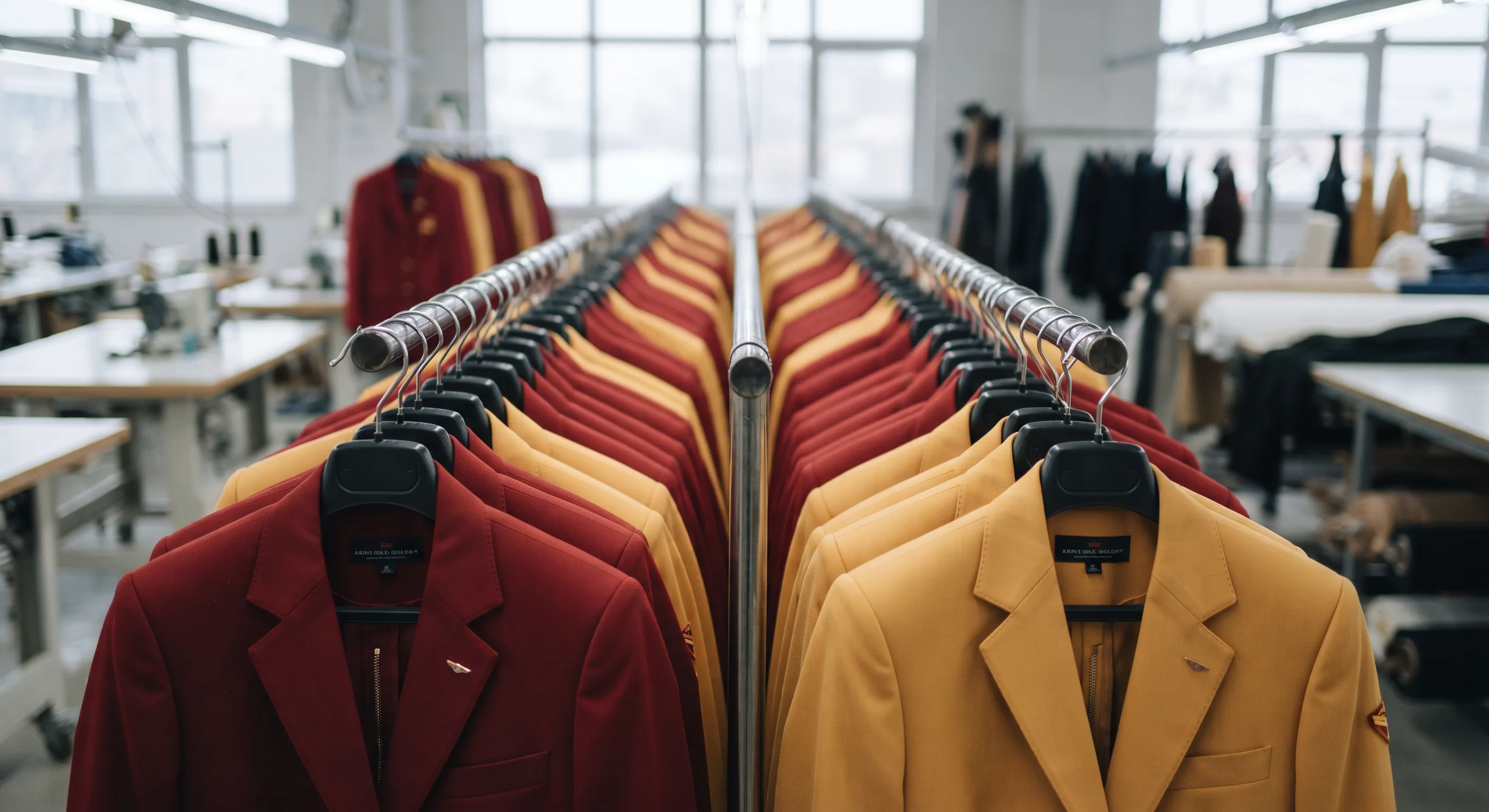
Inspection of healthcare uniforms before dispatch
75C Industrial wash cycle the cloth is tested against

The real test is the hundredth wash, not the first fitting.

Healthcare garments fail in a predictable order. The colour goes first, usually within twenty washes on a cheap dye. Then the neckline loses its shape because the rib was not the right weight. Then a side seam opens because the stitch density was set for retail rather than for a sixty degree cycle with mechanical agitation.

So a medical programme has to be specified backwards from the laundry contract. We need to know the wash temperature, whether it is in house or outsourced, whether garments are tumbled or tunnel finished, and roughly how many cycles a year each piece will take. That determines the cloth, the finish, the stitch density and the trim, and it is the difference between a garment that lasts eighteen months and one that looks tired at six.

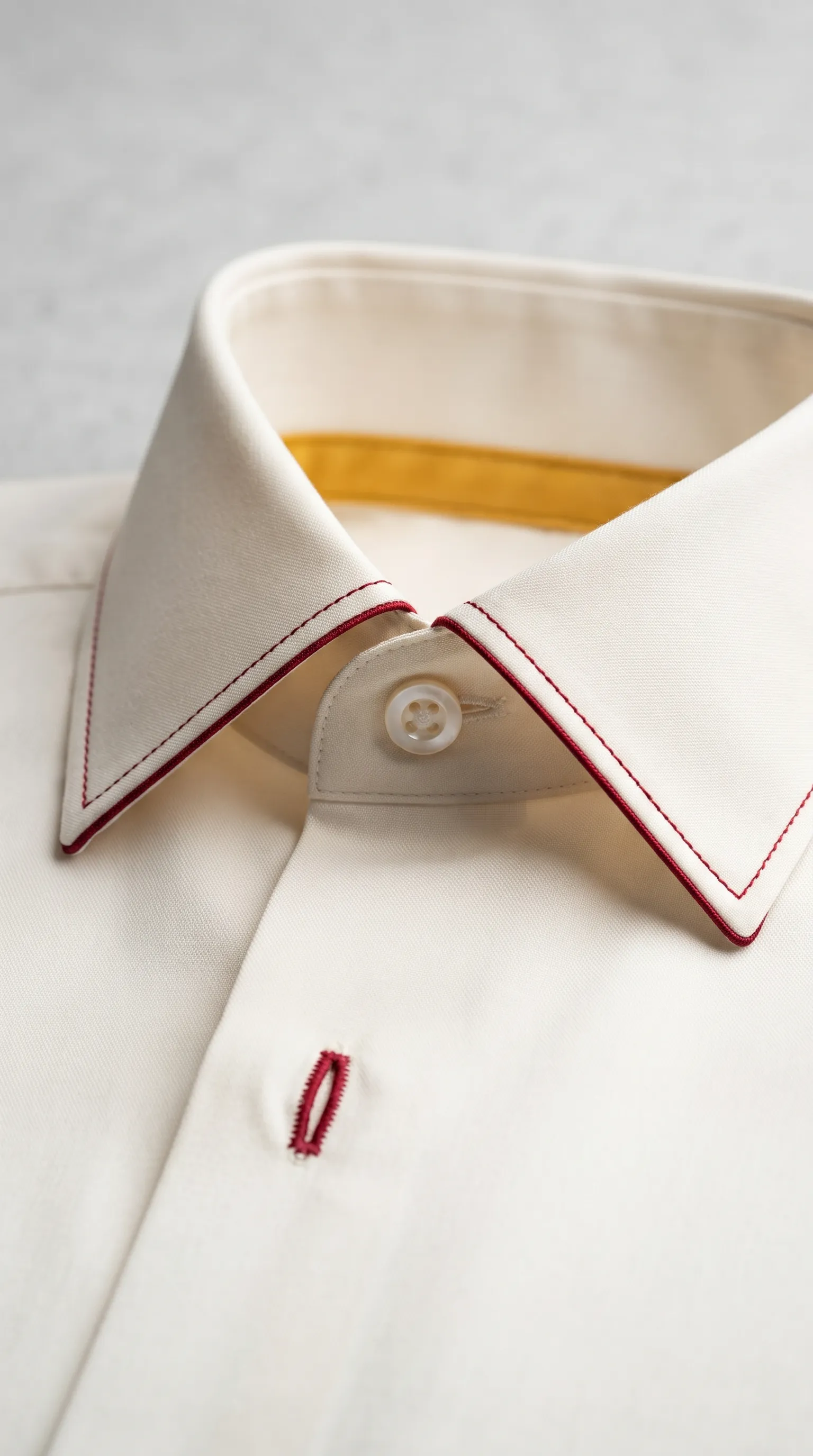
The second thing that matters in healthcare is legibility. Departments need to be identifiable across a ward corridor, agency staff need to be distinguishable from permanent staff, and a student needs to be visibly a student. Colour coding, contrast piping and embroidered role titles do that work, and they need to be locked into a standard so a top up order does not quietly introduce a fourth blue.

  • Cloth tested against your actual laundry temperature and cycle, not a generic figure
  • Antimicrobial and fluid resistant finishes specified per garment rather than across the board
  • Department colour coding held as a physical shade standard for the life of the contract
  • Pocket layout designed around what your staff actually carry
  • Stitch density set for industrial agitation, with bar tacks at pocket and vent stress points
The range 8 styles

The healthcare wardrobe, ward by ward.

A hospital programme usually needs six or seven of these. A clinic or a dental practice often needs three. Both are quoted the same way, from the garment list and the headcount.

01

Scrub tops

V neck, mock wrap and round neck blocks in a poly cotton with antimicrobial finish. Side vents for movement, reinforced neckline tape so the shoulder line does not stretch out.

180 GSM Antimicrobial Taped neckline Three pocket option

02

Scrub trousers

Drawcord and elasticated waist options with a cargo pocket variant for staff who carry more than a pen. Hem allowance graded so short and tall staff are not both wearing the same inside leg.

Drawcord or elastic Cargo option Graded inside leg Bar tacked pockets
03

Lab coats

Knee length and three quarter length coats in a poly cotton that stays white through high temperature laundry, with a fluid resistant finish and a collar built to sit flat after pressing.

Fluid resistant Knee or 3/4 length Fused collar Inside pocket
04

Theatre wear

Theatre suits, gowns and caps in a lint controlled cloth, built to the tie and closure pattern your theatre protocol specifies rather than to a generic template.

Lint controlled Reverse tie option Autoclave compatible cloth Colour coded
05

Nursing tunics and dresses

Traditional tunics with contrast piping for role identification, action back panels for reach, and a dress block for units that still run a formal ward uniform.

Contrast piping Action back Concealed zip Epaulette loops
06

Warm up jackets and fleeces

Scrub jackets and anti pill fleeces for cold wards, night shifts and transfer teams, matched to the department colour so the layer does not break the coding system.

Anti pill Matched to scrub shade Zip front Embroidered role
07

Patient and visitor wear

Patient gowns, pyjama sets, dressing gowns and visitor coats in easy wash cloths with closures chosen for someone who may be assisted into the garment.

Easy wash Assisted closures High volume packing Size coded
08

Aprons, caps and accessories

Fabric aprons, scrub caps, name tabs and role badges. The small identification pieces that keep colour coding readable when someone is wearing a fleece over their tunic.

Role embroidery Scrub caps Name tabs Woven size labels
Explore Sub categories
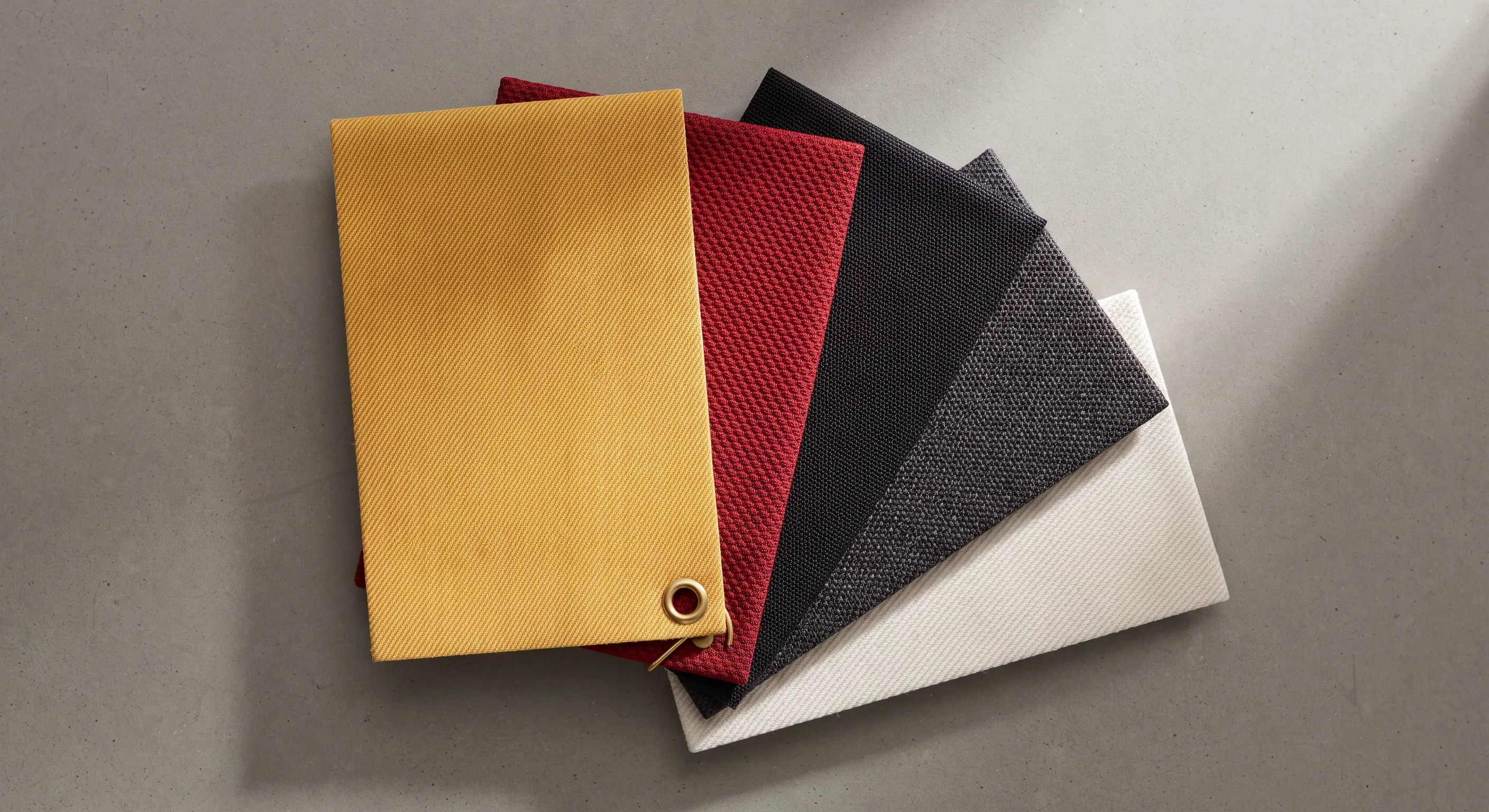
Materials Base cloths

Cloths specified around your laundry cycle.

Tell us the wash temperature and whether the garments are tunnel finished. That one answer changes which of these is correct for your programme.

Cloth Weight Construction Where it is used
Antimicrobial poly cotton 180 GSM Plain weave, 65/35 Scrub tops and trousers
Fluid resistant poly cotton 190 GSM Tight weave, DWR finish Lab coats and gowns
Poly cotton twill 200 GSM 2/1 twill Nursing tunics and dresses
Lint controlled poly 175 GSM Filament weave Theatre suits and caps
Stretch poly rayon 200 GSM Four way stretch Premium scrub blocks
Anti pill fleece 280 GSM Brushed back Warm up jackets
Easy wash poly cotton 160 GSM Plain weave Patient gowns and pyjamas

Finishes are applied at the mill, not sprayed on afterwards, which is why they survive repeated washing rather than disappearing in the first quarter. Certification paperwork for the finish is supplied with the shipment when your infection control team asks for it.

Watch 02:10

Where a healthcare garment is checked before it ships.

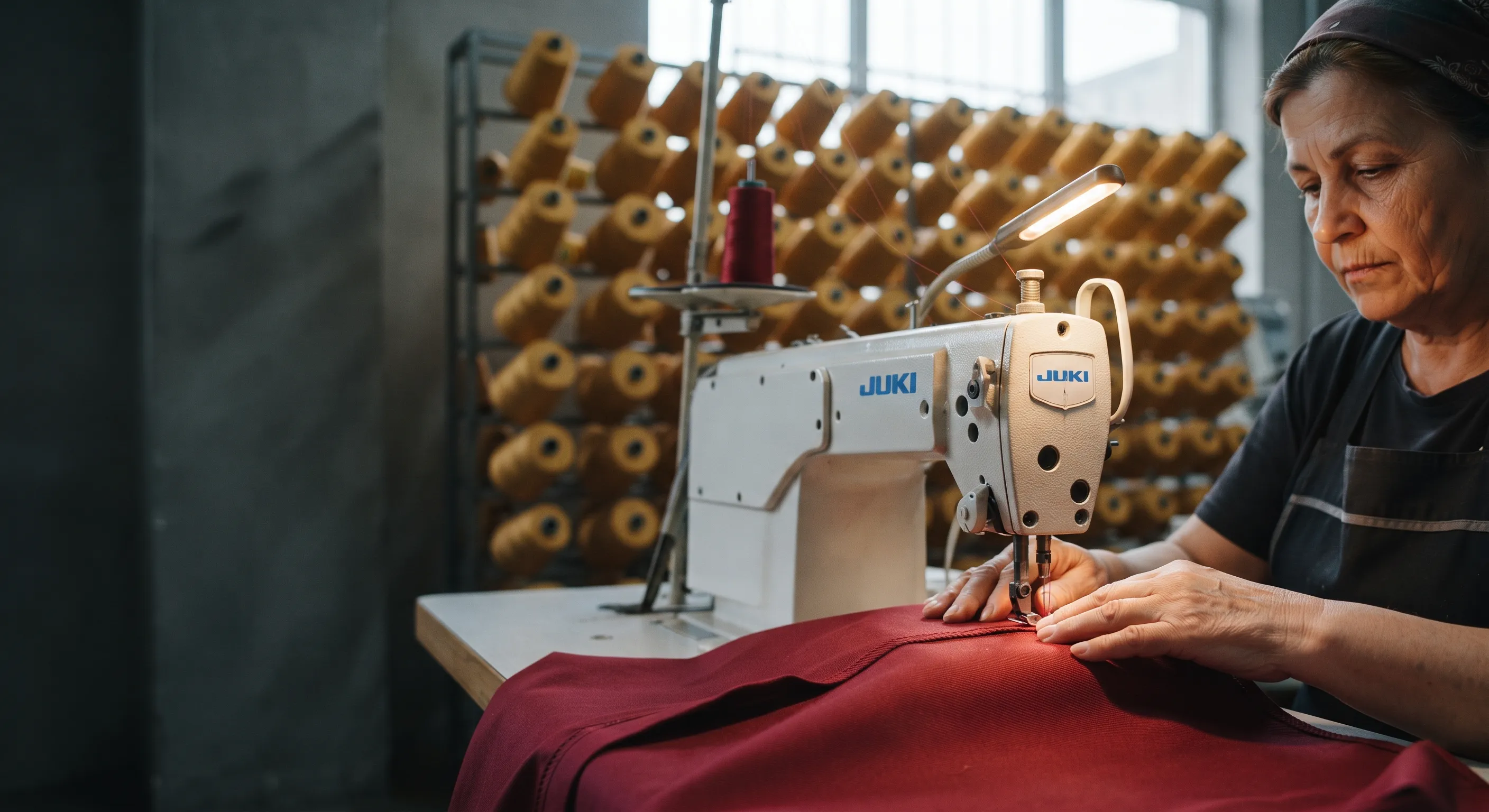
Cutting, assembly, measurement checks and packing on a live scrubs run. The section worth watching is inspection, because that is the stage that decides whether your ward receives two hundred identical garments or a hundred and ninety.

Healthcare run / assembly to inspection
AQL 2.5Inspection standard
100+Wash cycles tested
60kPieces per month capacity
Production 8 stages

Eight stages, and a laundry question at the front of them.

Healthcare is the one sector where the specification conversation starts with how the garment will be cleaned. Everything downstream follows from that answer.

Laundry and role audit

Wash temperature, cycle type, in house or outsourced, and the list of roles that need visual separation. This decides cloth, finish and colour coding before anything is drawn.

Colour coding map

Each department or role is assigned a shade, lab dipped on the actual cloth and approved physically. The approved swatch is held as the standard for the life of the contract.

Pattern and pocket layout

Blocks drafted to your size chart, with pocket count and placement set around what staff actually carry rather than a catalogue default.

Finish specification

Antimicrobial, fluid resistant or lint controlled finishes applied per garment. A patient gown and a theatre suit do not need the same treatment, and paying for both is waste.

Sample and wash trial

A pre production sample in the approved cloth, plus a wash trial through a cycle matching your laundry. Bulk is cut after you sign off both.

Bulk production

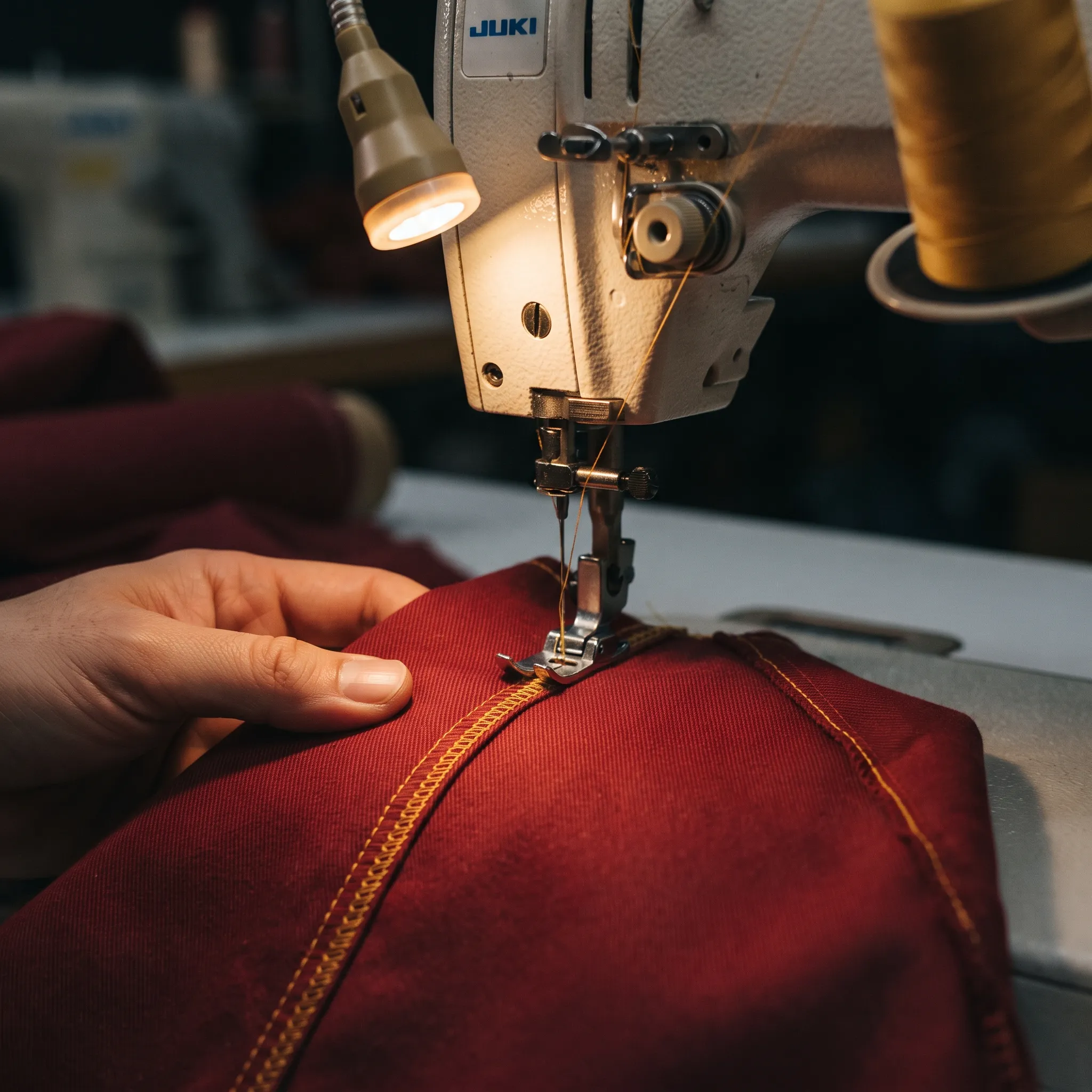
Assembled by operation with stitch density set for industrial agitation, taped necklines, and bar tacks at every pocket corner and vent head.

Inspection

AQL 2.5 with measurement checks against the signed spec, plus a colour check against the held standard so the top up run matches the original.

Pack and dispatch

Poly bagged, sorted by size, department and site, carton marked to your distribution list, with export documents prepared here.

Why Benjima Buyer checks

Six things an infection control lead will ask about.

Procurement asks about price. Infection control asks about these, and their answer is usually the one that decides the contract.

The finish is mill applied

Antimicrobial and fluid resistant treatments are applied at the cloth stage rather than sprayed onto a finished garment, so they survive the wash cycles instead of thinning out in the first quarter.

Wash tested before bulk

A sample from every new programme goes through a wash trial matched to your laundry cycle. Shrinkage, colour movement and seam integrity are measured before the bulk is cut.

Colour coding stays readable

Department shades are held as physical standards. A top up two years later matches the corridor, which is the entire point of a colour coding system.

Seams built for agitation

Stitch density is set for industrial laundry, necklines are taped, and pocket corners and vent heads are bar tacked, because those are the three places healthcare garments actually open up.

Sizing covers real staff

Ladies fit is a separate graded block and extended sizes run in the same production at the same unit price, so no member of staff is issued the nearest available size.

Paperwork travels with the goods

Finish certification, cloth specification and inspection records are supplied with the shipment, so your governance file is complete without a follow up email chain.

Case notes Recent runs

Three healthcare programmes and what each one fixed.

In every case the previous supplier was cheaper on the quotation and more expensive across the contract.

Hospital group / 5 departments

Civic Health

A colour coding system that had drifted into three different blues across three top up orders, rebuilt against one physical shade standard and held for the contract term.

5Departments
3,400Pieces
Private clinic group

Northgate Clinics

Scrubs that were losing shape at the neckline within two months. Rebuilt with a taped neckline and a heavier rib, and wash trialled against the clinic laundry before bulk.

100+Wash cycles tested
1,100Pieces
Dental group / 12 practices

Bright Dental

Twelve practices ordering separately and receiving slightly different garments. Consolidated into one programme with a single spec sheet and one dispatch schedule.

12Practices
1Spec sheet
Before you ask 8 answers

What healthcare buyers ask before ordering.

Are the antimicrobial finishes certified?
Yes. The finish is applied at the mill and the certification pack travels with the shipment, so your infection control and governance files are complete without chasing paperwork afterwards. Tell us which standard your policy references and we will confirm at quotation stage whether the cloth we are proposing meets it.
Will the garments survive our industrial laundry?
That depends on your cycle, which is why we ask for it before specifying anything. Give us the temperature, the cycle type and whether garments are tunnel finished. A sample then goes through a wash trial matched to those conditions, and we measure shrinkage, colour movement and seam integrity before the bulk is cut.
Can you colour code by department or by role?
Yes, and this is usually the most valuable part of the programme. Each department or role is assigned a shade, lab dipped on the actual cloth and approved physically. That swatch is held on file, so a top up order in eighteen months matches the corridor rather than introducing a new blue nobody agreed to.
What is the minimum order for scrubs?
Fifty pieces per style. A style means one garment in one colourway, so a programme running four department colours needs fifty in each. Most hospital groups clear that easily. Smaller clinics often start with two colours and add departments at the second order, using the same held pattern and shade standard.
Do you make stretch scrubs?
Yes. A poly rayon stretch block is available for programmes that want a more contemporary fit, typically for private clinics and theatre teams. It costs more per piece than standard poly cotton and behaves slightly differently in a high temperature laundry, so we will be straightforward with you about which is the better fit for your wash contract.
Can staff names and roles be embroidered?
Yes. Role titles are embroidered as part of the production run at no meaningful additional lead time. Individual staff names are handled either as part of the run, if you supply the list at order stage, or as a held service where names are added to buffer stock as staff join. The second option is usually more practical in a unit with turnover.
How long does a healthcare order take?
Sampling is seven to ten days once the laundry audit and colour map are agreed. Bulk is twenty one to thirty days. If your cloth needs to be dyed to a department colour that is not a stock shade, add roughly ten days at the front, and that is included in the date we quote rather than raised later.
Do you supply patient gowns and visitor wear as well?
Yes. Patient gowns, pyjama sets, dressing gowns and visitor coats run in the same programme, usually in a lighter easy wash cloth since they take a different cycle count. Keeping them in the same order means one delivery schedule and one set of paperwork rather than two suppliers.

Send the garment list and your wash cycle.

Those two things are enough for a real costing. If you already run a colour coding system, send one garment from each department and we will match to the physical standard rather than to a code in a document.

Sales line
+92 329 6140058
Minimum order
50 pieces per style
Reply time
One working day