Heavyweight vs lightweight gym t-shirts is one of the most important decisions in wholesale activewear buying. Fabric weight, measured in GSM, directly affects comfort, durability, and performance. This guide explains how to choose the right fabric weight for your market, customers, and product range in 2026.
1. Benefits of Lightweight Gym T-Shirts
Lightweight gym t-shirts are highly popular due to their breathability and comfort during intense workouts. Fabrics in the 120–155 GSM range dry faster, feel less restrictive, and are ideal for warm climates or cardio-focused training.
They are also cost-effective for wholesale buyers because they use less fabric and are easier to ship and store in bulk quantities.
2. What GSM Means in Gym Wear
GSM (grams per square meter) measures fabric weight. Lower GSM fabrics are lighter and more breathable, while higher GSM fabrics are heavier and more structured.
GSM does not define quality alone — it must be evaluated alongside fabric composition and construction to determine overall performance and durability.
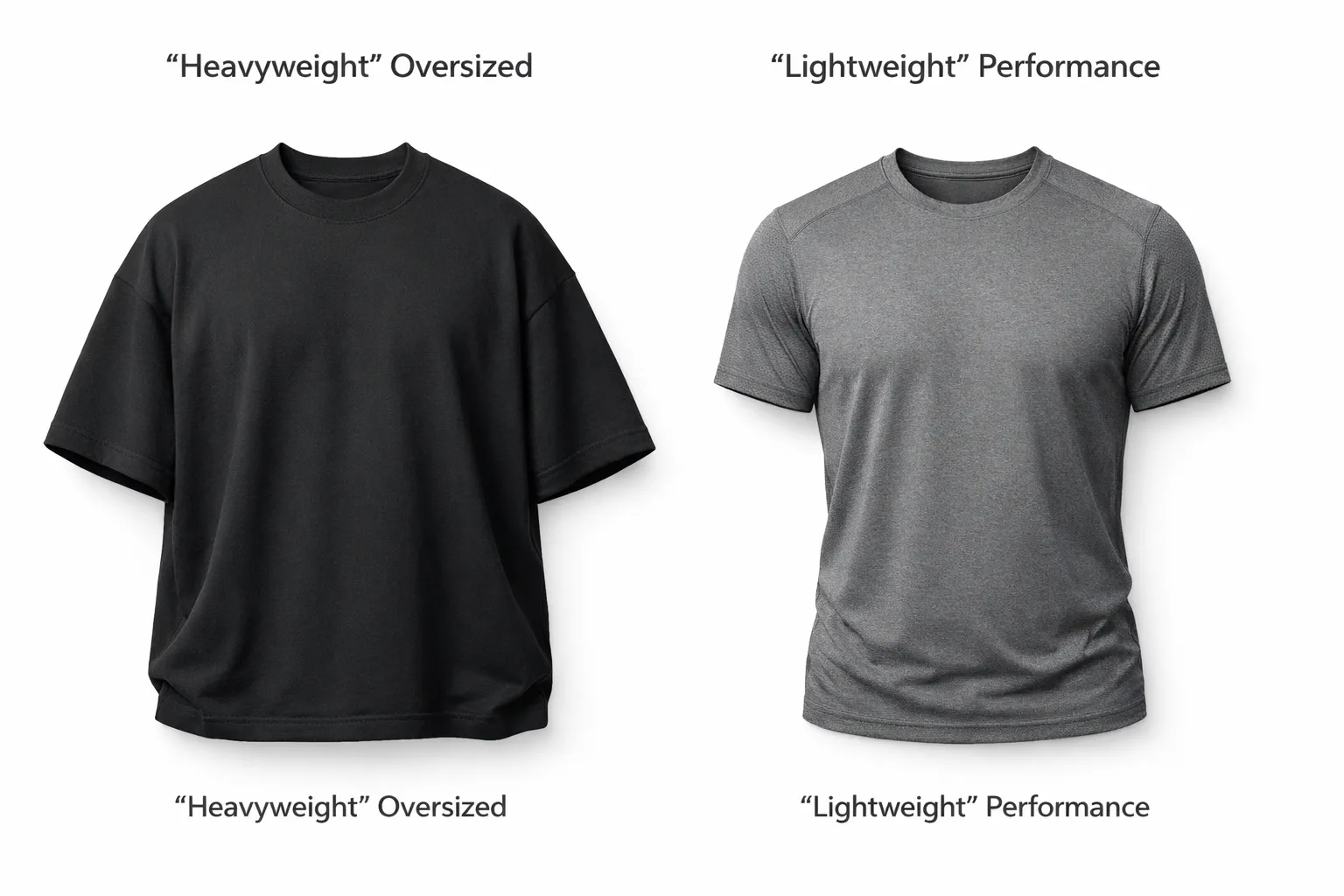
3. Heavyweight vs Lightweight Comparison
Understanding the difference between fabric weights is essential:
- Lightweight (120–155 GSM): Breathable, flexible, ideal for hot conditions
- Midweight (160–200 GSM): Balanced comfort and structure
- Heavyweight (220–320 GSM): Durable, premium feel, better shape retention
Heavyweight shirts offer a more premium feel, while lightweight shirts excel in performance environments.
4. Fabric Weight Across Product Categories
Different products require different GSM levels:
- Tank tops: 130–160 GSM
- Standard gym t-shirts: 160–200 GSM
- Training polos: 200–230 GSM
- Lifestyle gym tees: 240–320 GSM
Matching fabric weight to product type ensures better performance and customer satisfaction.
5. How to Choose the Right GSM
Selecting the correct GSM depends on four key factors:
- Training activity type
- Climate conditions
- Target price point
- Customer expectations
Evaluating these factors helps avoid costly mistakes when placing bulk orders.
6. US Market Preferences
The US market has a unique demand pattern. Many consumers associate heavier fabrics with premium quality, especially in lifestyle and streetwear-inspired gym clothing.
However, performance athletes prefer lightweight fabrics for breathability and comfort. This creates a dual demand that brands must address strategically.
7. Seasonal Demand for Lightweight Tops
Lightweight gym wear demand increases during warmer months. Summer collections typically feature 130–155 GSM fabrics for maximum comfort and breathability.
Planning inventory ahead of seasonal demand ensures better sales performance and reduces stock issues.
8. GSM Selection by Price & Category
A practical GSM selection guide:
- 120–150 GSM: Budget lightweight performance wear
- 155–185 GSM: Standard mid-range gym wear
- 190–220 GSM: Premium training apparel
- 240–320 GSM: High-end lifestyle gym wear
Aligning GSM with price positioning helps maintain customer satisfaction and perceived value.
9. Frequently Asked Questions (FAQs)
What is the best GSM for gym t-shirts?
160–180 GSM is ideal for most gym wear as it balances comfort and durability.
Are heavyweight gym t-shirts better?
They offer durability and a premium feel but may be less comfortable in hot conditions.
Is lightweight fabric good for workouts?
Yes, it is perfect for high-intensity training and warm climates due to its breathability.
Which GSM is best for summer gym wear?
120–155 GSM is ideal for summer due to its lightweight and breathable nature.
How do I choose fabric for wholesale gym wear?
Consider climate, target audience, product category, and pricing before selecting GSM.
For bulk orders, custom manufacturing, or wholesale inquiries, contact us at business@benjima.com.