Skip to content
Programme 06 / Industrial

Workwear that fails last, at the seams everyone else skips.

Coveralls, hi vis, flame resistant drill and cargo trousers built with bar tacked stress points, reinforced knees and triple stitched main seams. Certification paperwork supplied with the shipment, because your safety officer will ask for it.

Industrial programme / FR and hi vis
Minimum order
50 pcs per style
Sampling
10 to 14 days
Bulk run
25 to 35 days
Certification
Supplied with goods
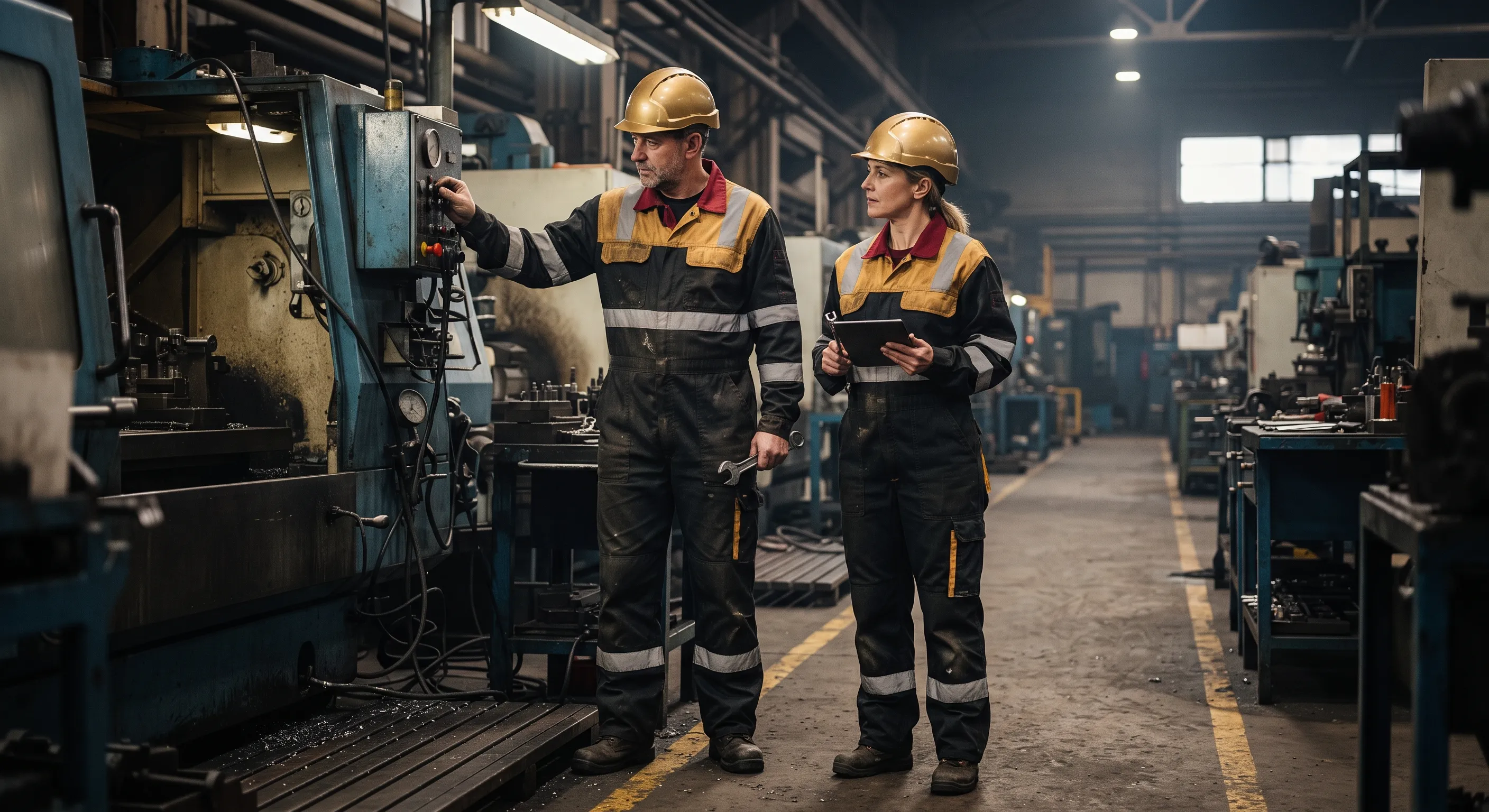
Industrial workwear inspection before dispatch
320 GSM flame resistant drill for welding and energy sites

Every garment fails at a stress point. The question is which one.

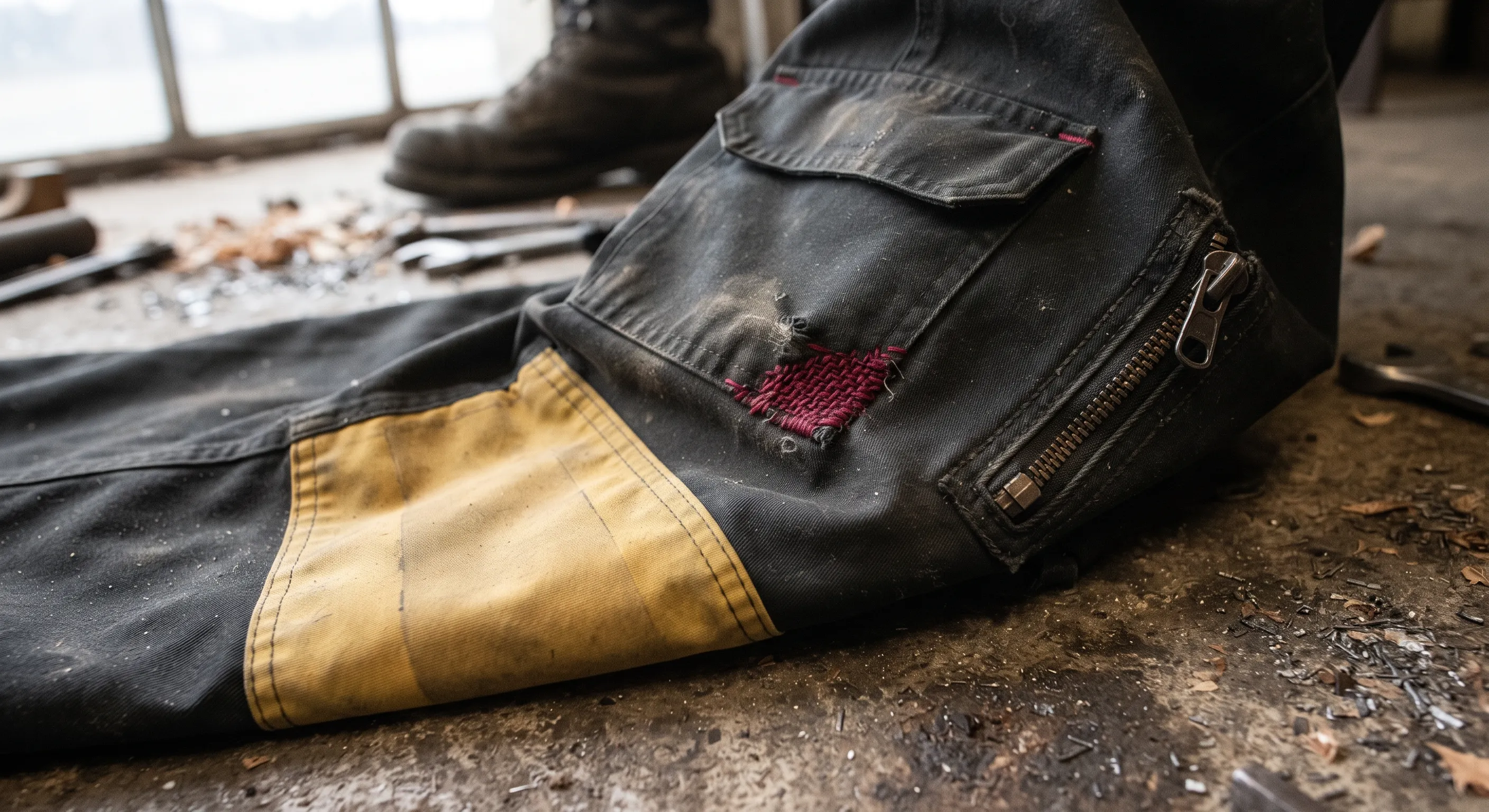
Workwear does not wear out evenly. It goes at the knee, the crotch seam, the pocket corner and the point where a strap meets a panel. Everything else on the garment usually has years left in it when it is thrown away. That means the entire value of a workwear specification sits in perhaps eight places on the pattern, and a supplier who reinforces those eight places produces a garment that lasts twice as long for maybe fifteen percent more cloth and thread.

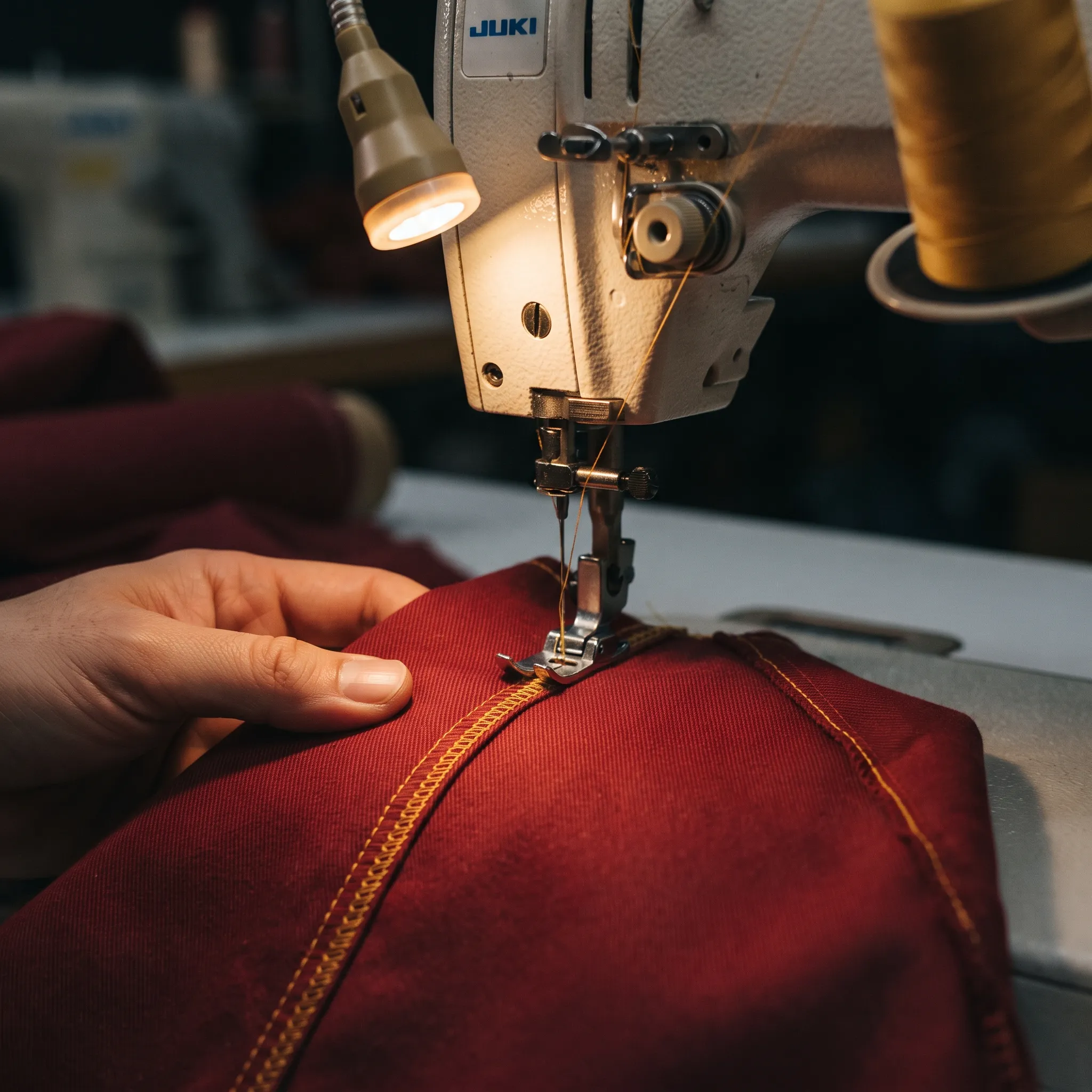
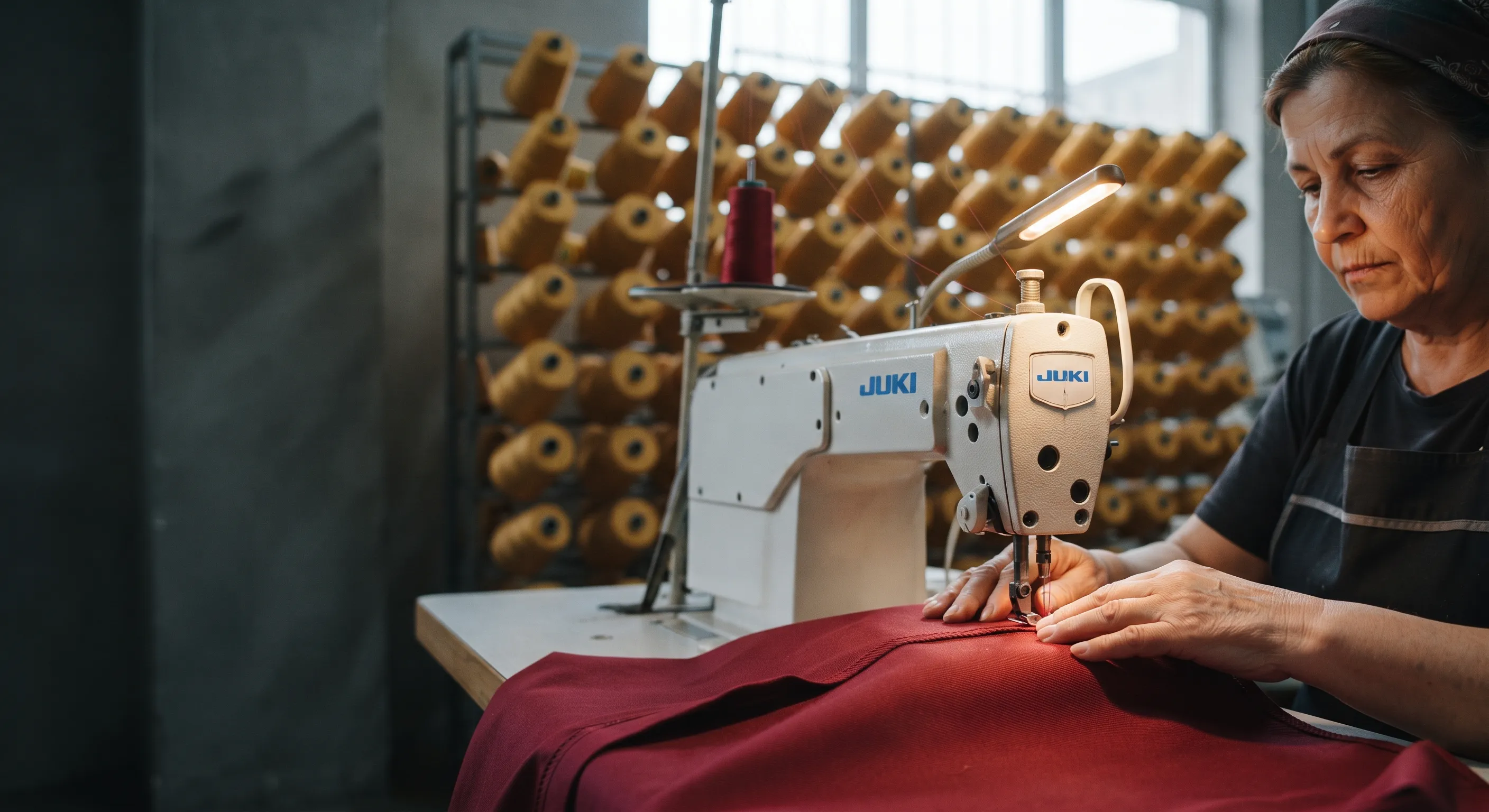
So we build from the failure points inwards. Main seams triple stitched or felled. Bar tacks at every pocket corner, belt loop, fly head and vent. Knee panels doubled with an optional pad pocket. Crotch built with a gusset on coverall blocks so the seam does not take the whole load when someone climbs. None of this is exotic. It is simply the specification most catalogue workwear quietly omits to hit a price.

The second half of industrial work is compliance. Hi vis has to be built to the correct class with the correct tape configuration, and flame resistant garments have to arrive with a certification pack your safety officer can file. We will tell you at quotation stage exactly what the cloth is certified to, and if a requirement in your tender is outside what we can honestly supply, we will say so rather than work around the wording.

  • Triple stitched or felled main seams rather than a single overlock
  • Bar tacks at pocket corners, belt loops, fly heads and vent tops
  • Reinforced knee panels with optional knee pad pockets
  • Gusseted crotch on coverall and boilersuit blocks
  • Certification pack for FR and hi vis supplied with the shipment
The range 8 styles

The workwear range, built by failure point.

Each of these exists in a standard build and a heavy duty build. The heavy duty version costs more per piece and is almost always cheaper across a year, which is the calculation worth running before you order.

01

Coveralls and boilersuits

Full length coveralls in cotton drill or poly cotton, with a gusseted crotch, action back and a two way zip. Built for climbing, kneeling and getting in and out over boots.

280 GSM drill Gusseted crotch Action back Two way zip
02

Flame resistant workwear

Inherent FR drill coveralls, shirts and trousers for welding, energy and petrochemical sites, supplied with the certification pack your safety officer will ask to see.

320 GSM FR drill Inherent treatment Certification pack FR thread and trims
03

Hi vis vests and jackets

Class 2 and class 3 hi vis in vest, jacket and bomber builds with correctly configured retroreflective tape rather than tape applied to a rough approximation of a standard.

Class 2 and 3 Retroreflective tape ID pocket Radio loops
04

Cargo and work trousers

Multi pocket cargo trousers in drill with doubled knee panels, bar tacked pocket corners and a hammer loop where the trade needs one.

Doubled knee Knee pad pocket Hammer loop Triple stitched seams
05

Work shirts and polos

Drill and poly cotton work shirts with a reinforced placket, plus heavy pique polos for supervisory and yard roles that need a smarter garment.

Reinforced placket Pen pocket Heavy pique option Hi vis tape option
06

Jackets and outerwear

Bomber jackets, parkas, softshell and quilted linings for yard, cold store and outdoor sites, with a layering system so one shell covers several seasons.

Quilted lining Water repellent Layering system Storm cuffs
07

Bib and brace, dungarees

Bib and brace overalls with bar tacked strap joins, adjustable buckles and a chest pocket layout set around what the trade actually carries.

Bar tacked straps Adjustable buckles Rule pocket Doubled knee
08

Aprons, sleeves and accessories

Heavy aprons, arm sleeves, caps, and site identification trims. Small items, but the ones that go missing and get reordered most often.

Heavy drill Arm sleeves Site ID trims Reflective bands
Materials Base cloths

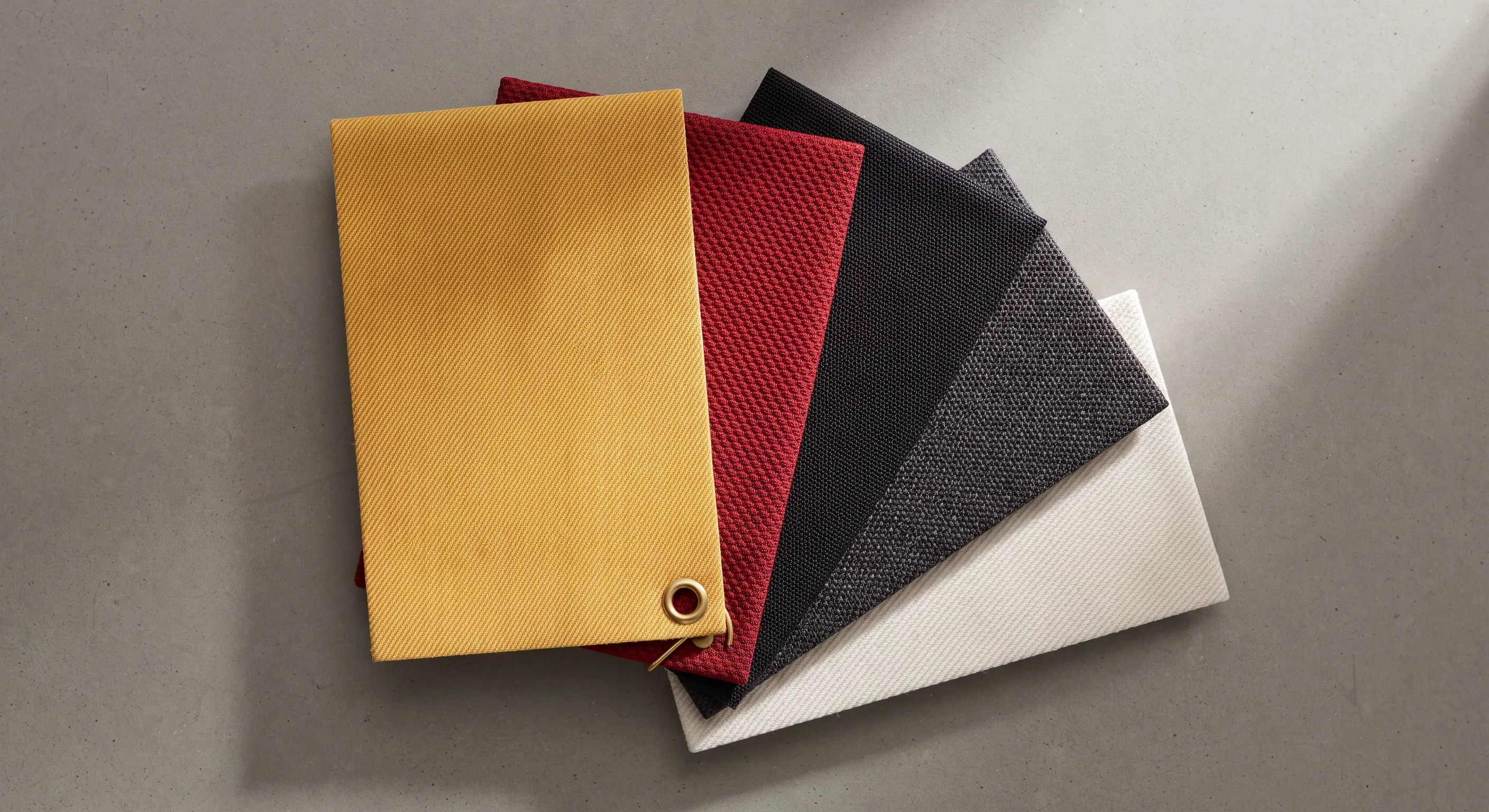
Cloths rated for the site, not for the catalogue photograph.

Workwear cloth is bought on tear strength, abrasion resistance and certification. Hand feel is the last consideration rather than the first.

Cloth Weight Construction Where it is used
Cotton drill 280 GSM 3/1 twill Coveralls and cargo trousers
Heavy cotton drill 320 GSM 3/1 twill Heavy duty and abrasive sites
Flame resistant drill 320 GSM Inherent FR treatment Welding, energy, petrochemical
Poly cotton workwear twill 245 GSM 2/1 twill, 65/35 General industry and logistics
Hi vis polyester 150 GSM Birdseye knit Class 2 and 3 vests
Hi vis oxford 210 GSM Coated oxford Hi vis jackets and outerwear
Ripstop 200 GSM Ripstop weave Light duty and hot climate sites

Where a cloth carries a certification, the paperwork travels with the shipment. We will state plainly at quotation stage what a cloth is and is not certified for. If your tender asks for something we cannot honestly supply, you will hear that from us before you commit, not afterwards.

Watch 02:10

The reinforcement stages a workwear garment goes through.

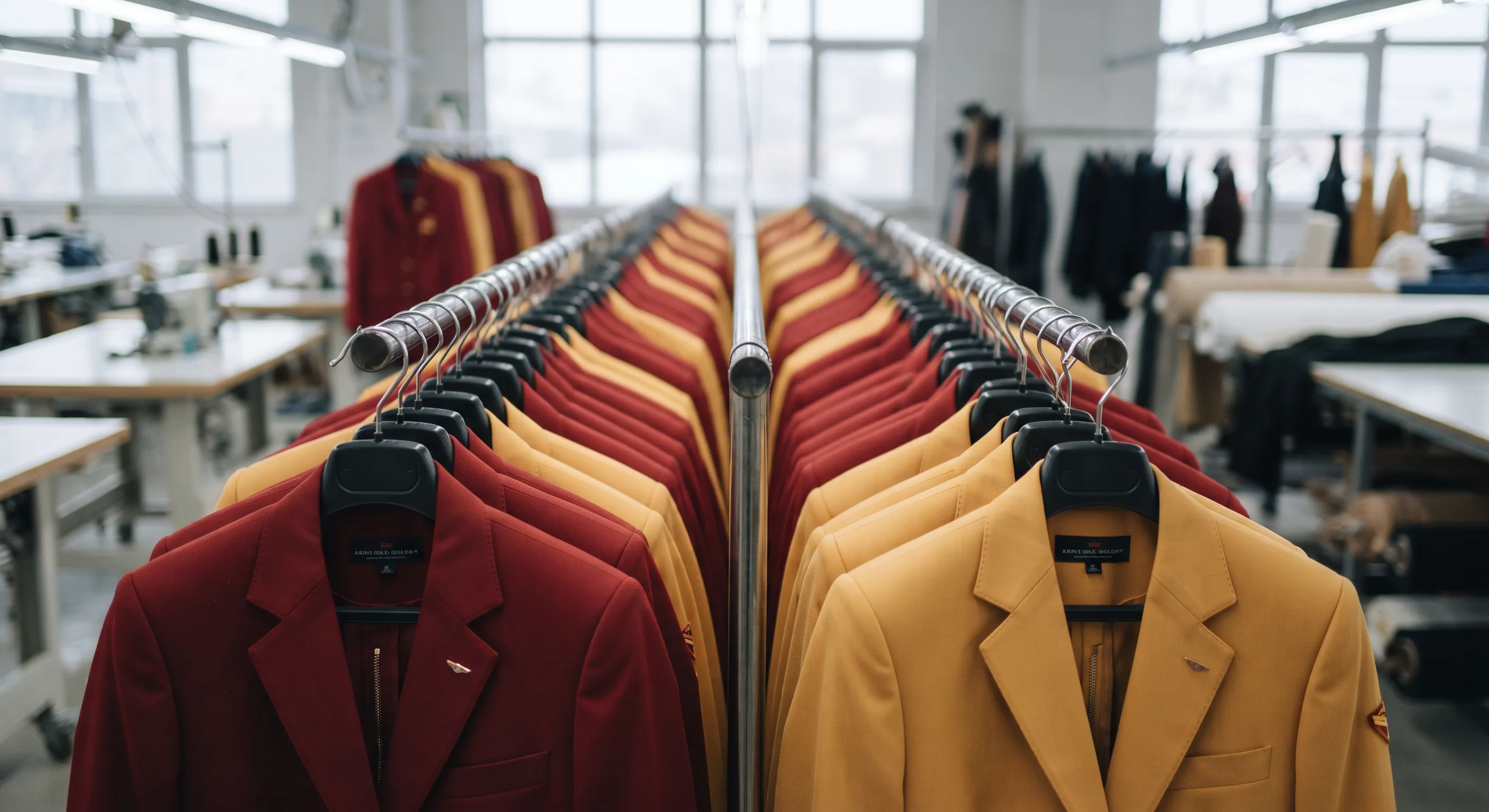
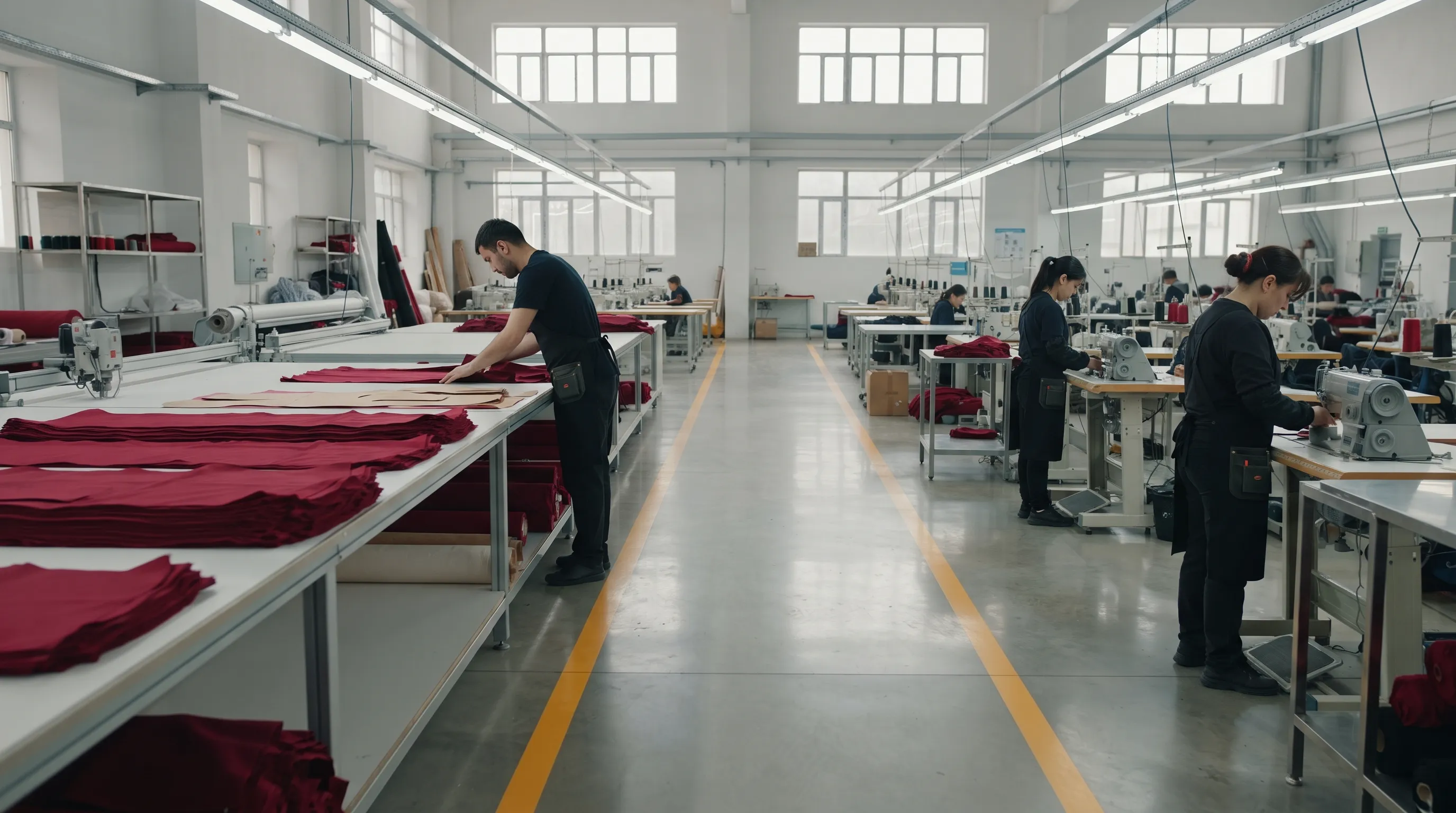
Cutting, seam construction, bar tacking and inspection on a live workwear run. The bar tacking stage is the one worth watching, because it is the single biggest difference between a twelve month garment and a three year one.

Industrial run / seam construction to inspection
320GSM FR drill
3xStitched main seams
AQL 2.5Inspection standard
Production 8 stages

Eight stages, beginning with a site risk list.

Industrial briefs that begin with a garment name produce generic workwear. Briefs that begin with what the site actually does produce garments people keep wearing.

Site and hazard audit

What the job involves, what the hazards are, which standards your policy references and how the garments are laundered. Everything downstream is decided here.

Specification and certification check

Cloth, thread, trims and tape selected against the standards you need. If a requirement is outside what we can supply honestly, you are told at this stage.

Pattern and reinforcement map

Blocks drafted to your size chart with the reinforcement points marked explicitly: knees, crotch, pocket corners, belt loops, strap joins and vent heads.

Pre production sample

A real garment in the approved cloth, in ten to fourteen days. FR and hi vis samples take longer than standard workwear because the trims have to match the cloth certification.

Wear trial on site

We recommend a short wear trial with two or three of the people who will actually wear it. Site teams find pocket and movement problems that a fitting never will.

Bulk production

Cut in lay, main seams triple stitched or felled, bar tacks applied at every marked point, tape applied to the correct configuration for hi vis classes.

Inspection and certification pack

AQL 2.5 with measurement checks, plus assembly of the certification and cloth specification pack that ships with the goods.

Pack and dispatch

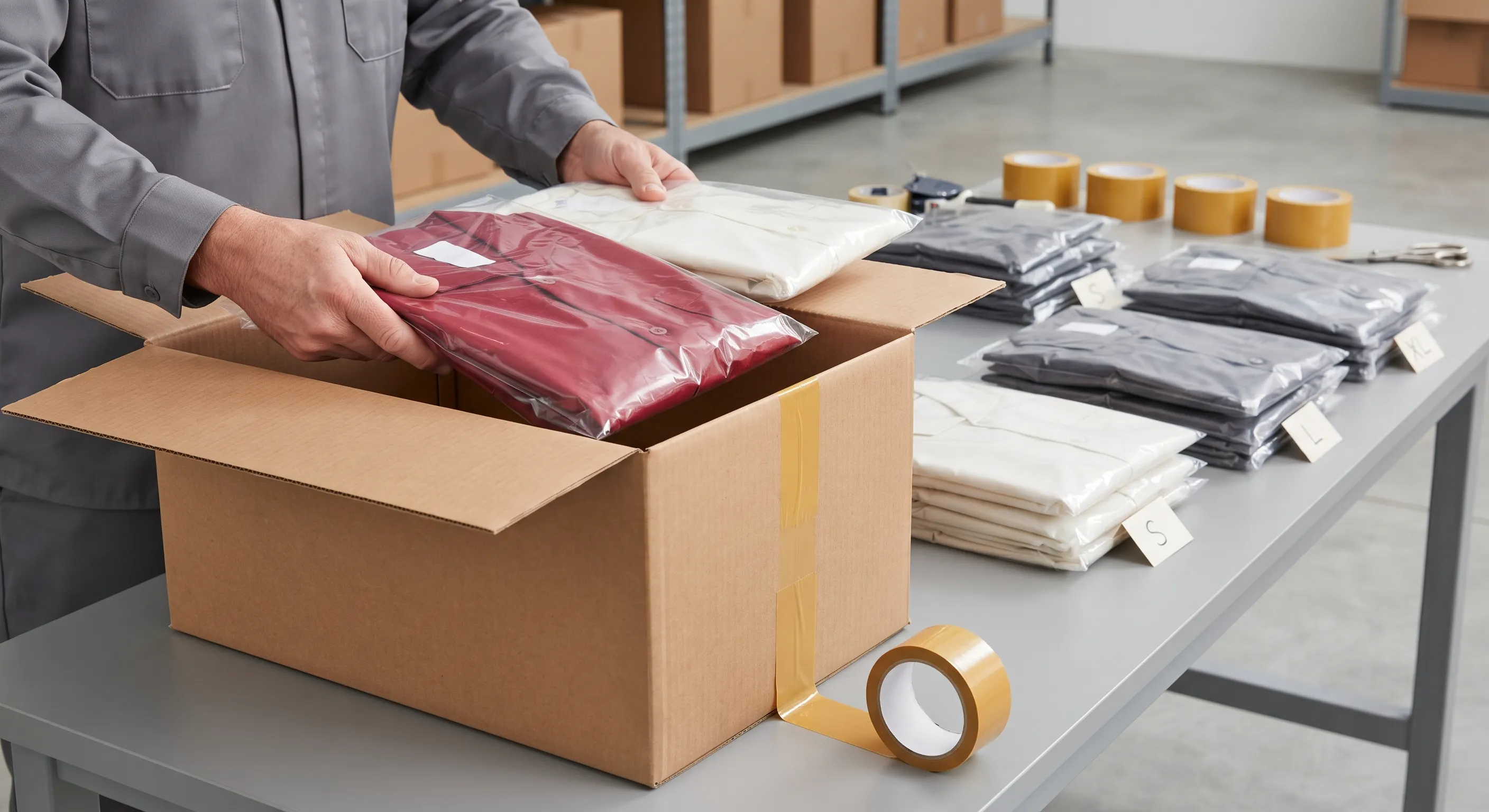
Sorted by size and site, carton marked to your list, with export documents and consolidated shipping handled here.

Why Benjima Buyer checks

Six things a safety officer checks before a buyer does.

Industrial orders are usually signed by procurement and vetoed by HSE. These are the six places HSE looks.

Paperwork arrives with the goods

Certification for FR cloth and hi vis construction, plus cloth specifications and inspection records, packed with the shipment so your governance file closes without a follow up email chain.

Tape configuration is correct

Hi vis class is a function of background material area and tape placement, not of how bright the garment looks. We build to the configuration the class actually requires.

FR trims match the FR cloth

FR thread, FR zips and FR tape. A flame resistant garment assembled with standard polyester thread is not a flame resistant garment, and it is a common shortcut.

Reinforcement is specified, not assumed

The reinforcement map is part of your signed spec sheet, so bar tack positions and knee construction are contractual rather than a matter of which line ran the order.

Sizing covers the whole crew

Extended sizes run in the same production at the same unit price, and coverall blocks are graded on height as well as girth so tall crew are not issued something that pulls at the crotch.

Honest answers on standards

If a tender clause asks for something outside what we can certify, we say so at quotation. That conversation is unwelcome early and considerably worse late.

Case notes Recent runs

Three industrial programmes and the failure that triggered them.

In each case the client had already calculated what replacement frequency was costing them.

Steel fabrication / FR required

Steelworks Ltd

FR coveralls where the previous supplier had used standard thread and trims. Rebuilt with FR thread, FR zips and a certification pack that closed a long running audit finding.

1,800Pieces
320GSM FR drill
Logistics / 3 depots

Northline Logistics

Hi vis and cargo trousers failing at the knee within five months across three depots. Doubled knee panels and bar tacked pockets took average garment life past two years.

3Depots
4xGarment life
Utilities contractor

Gridline Services

A crew spread across height ranges that no standard size chart covered. Coverall blocks regraded on height as well as girth, which removed most of the crotch seam failures.

2Height grades added
950Pieces
Before you ask 8 answers

What HSE leads and site buyers ask first.

Do your flame resistant garments come with certification?
Yes. The certification pack for the cloth, along with the cloth specification and inspection records, ships with the goods. We will also state plainly at quotation which standard the cloth is certified to, and if your policy references a standard we cannot honestly meet, you will hear that before you place the order rather than after an audit.
Is the thread flame resistant as well?
On FR garments, yes, and it matters more than most buyers realise. FR thread, FR zips and FR tape are specified throughout. A coverall cut in certified FR cloth and assembled with standard polyester thread will not behave as a flame resistant garment, and it is one of the most common corners cut in low cost workwear.
Can you build hi vis to a specific class?
Yes. Class is determined by the area of background material and the configuration of retroreflective tape, so it is a construction decision rather than a brightness decision. Tell us the class your site requires and the garment type, and we will build to that configuration and confirm it in the spec sheet you sign.
How much longer does reinforced workwear actually last?
In the programmes where clients have measured it, garment life roughly doubles and in some cases more. The reinforcement adds cloth and thread cost in the region of ten to fifteen percent per piece. If your current replacement cycle is under a year, that calculation usually settles itself quickly. We are happy to spec both builds so you can compare.
What is the minimum order for workwear?
Fifty pieces per style. FR programmes sometimes carry a higher practical minimum because the cloth is bought in certified lots, and we will tell you the real number for your specification rather than quoting a headline figure and adjusting later.
How do you size coveralls for a mixed crew?
Coverall blocks are graded on height as well as girth, because a single chart produces garments that pull at the crotch on tall crew and bunch on shorter ones. Extended sizes run in the same production at the same unit price. This is usually the change that removes most fit complaints on a coverall programme.
How long does an industrial order take?
Sampling is ten to fourteen days, which is longer than our other programmes because FR and hi vis trims have to be matched to the cloth certification. Bulk is twenty five to thirty five days. Certified cloths occasionally have lead times of their own, and if that applies we build it into the quoted date.
Can you add site or contractor identification?
Yes. Embroidery, heat seal, printed panels and reflective identification bands. For FR garments the identification method has to be compatible with the cloth certification, so we will specify a compliant option rather than applying a standard heat transfer that would compromise the garment.

Tell us what the site does.

The job, the hazards, the standards your policy references and the headcount. That is enough for a costing, and it is a far better brief than a garment name and a quantity.

Sales line
+92 329 6140058
Minimum order
50 pieces per style
Reply time
One working day